
Travellers often find themselves tempted to bloat their itineraries as much as (in)humanly possible. With time in short supply, and the tally of things to see as long as one’s fevered imagination allows, the resulting journey’s pace might more closely resemble that of a footrace than the relaxing holiday it was originally intended to be. The objectives of rest and recreation would thus be forced aside, replaced by a furious determination to tick as many places as possible off the to-see list before the last call for boarding draws a curtain across the entire endeavour.
I should know – I’ve been guilty of the same.
Having said that, one thing I’ve begun to cultivate during my journeys is an appreciation for quiet, gently paced interludes. The garden walk. The tea ceremony. The countryside hike. The (almost) falling asleep during a dialogue-heavy 2-hour local movie with no subtitles.
Add to them the leisurely park stroll early in the morning, before the ticking of the clock and the stubbornness of the railway timetable join forces to drag me, kicking and screaming, back into my usual hectic pace.
********************
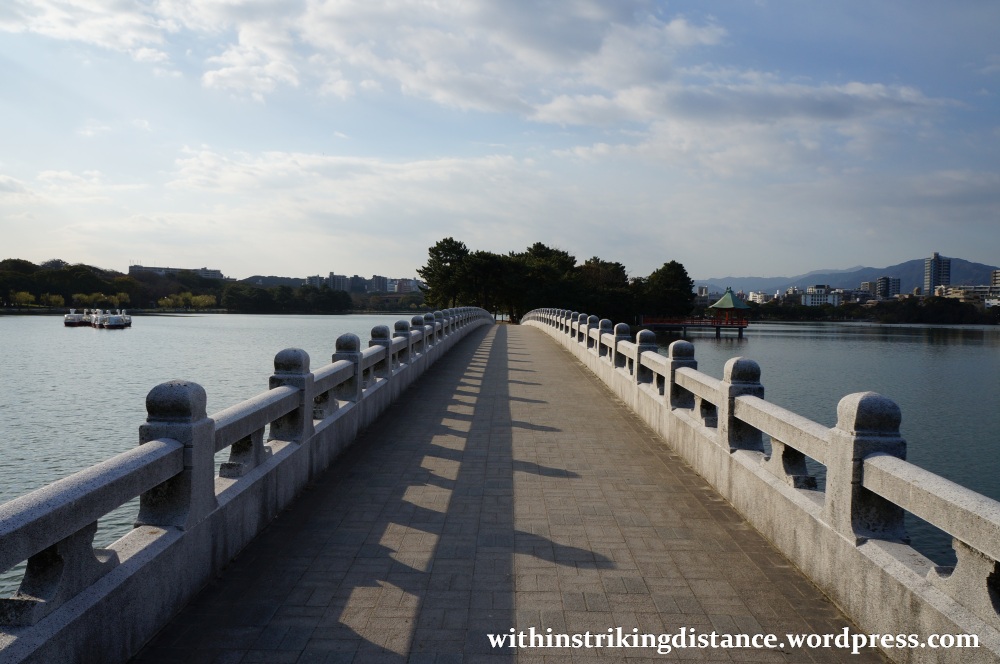
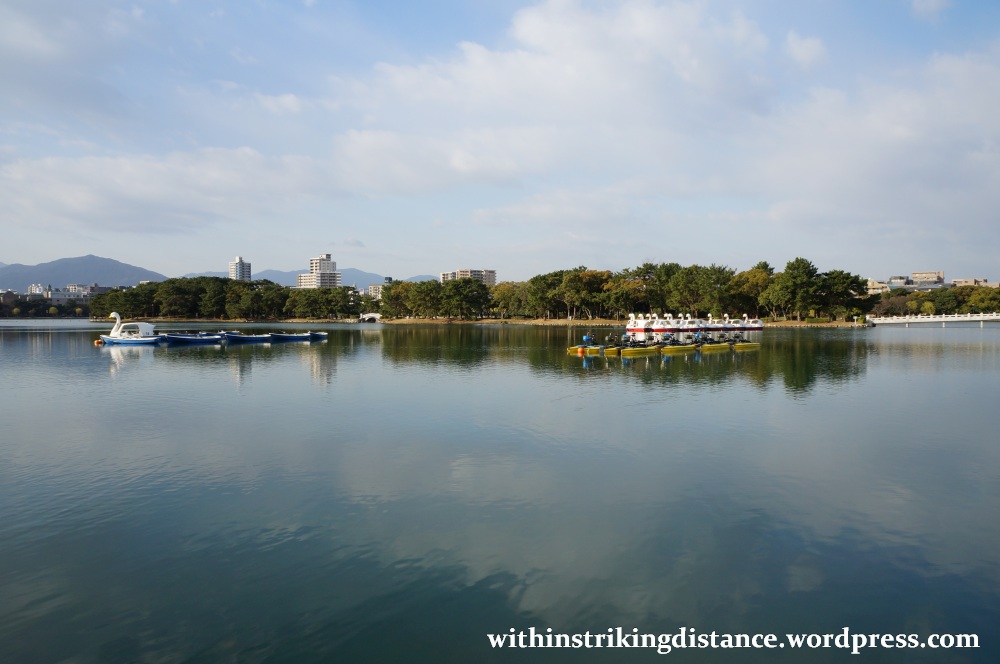
Tuesday morning in Fukuoka, 24 March 2015. Lightly overcast skies and bracing spring air greeted me as I journeyed towards the city’s sprawling Ōhori-kōen: a spacious public park centred on a vast pond not far from the ruins of Fukuoka Castle (which I’d just been to the day before). Easily accessed from Ōhorikōen Station on the urban subway’s Kūkō Line, this patch of green and shimmering, wind-sculpted blue in the heart of the city was the perfect place to enjoy a holiday from my holiday.
Observe the park’s proximity to Fukuoka Castle…
…and the name starts to make sense. 大濠 (Ōhori) simply means “big moat” – an apt description of the role that the central pond formerly played in the defence of the castle. During the 1920s, with the castle in ruins and no longer in need of protection from attack, the vast western moat was redeveloped into the leafy refuge we see today.
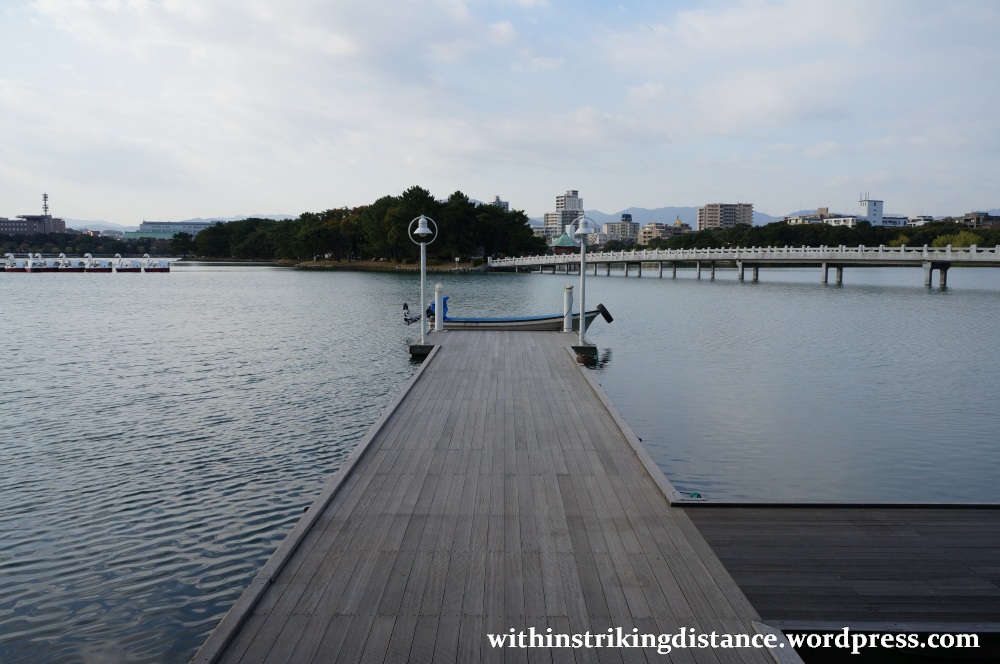
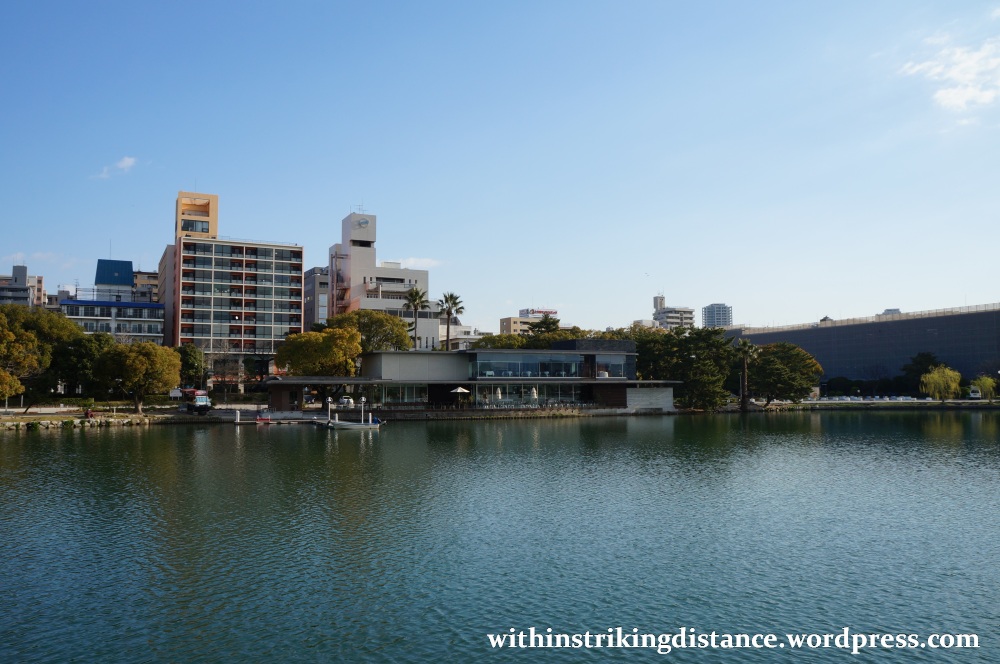
The park is equipped with jogging paths, walking trails, boating areas, and various other facilities designed to lure homebodies into the great outdoors. It’s large enough to feel slightly detached from the urban congestion of downtown Fukuoka, even though the concrete blocks of the city rise up against it from all directions.
Right, I think I’ve said far too much already. These snapshots will do a better job of describing the place.

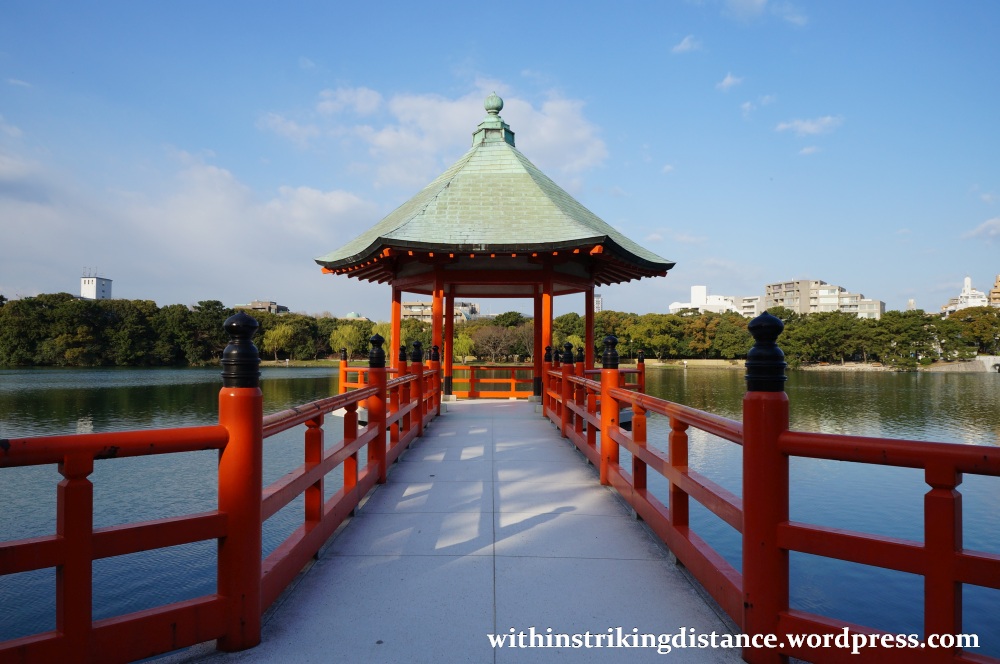
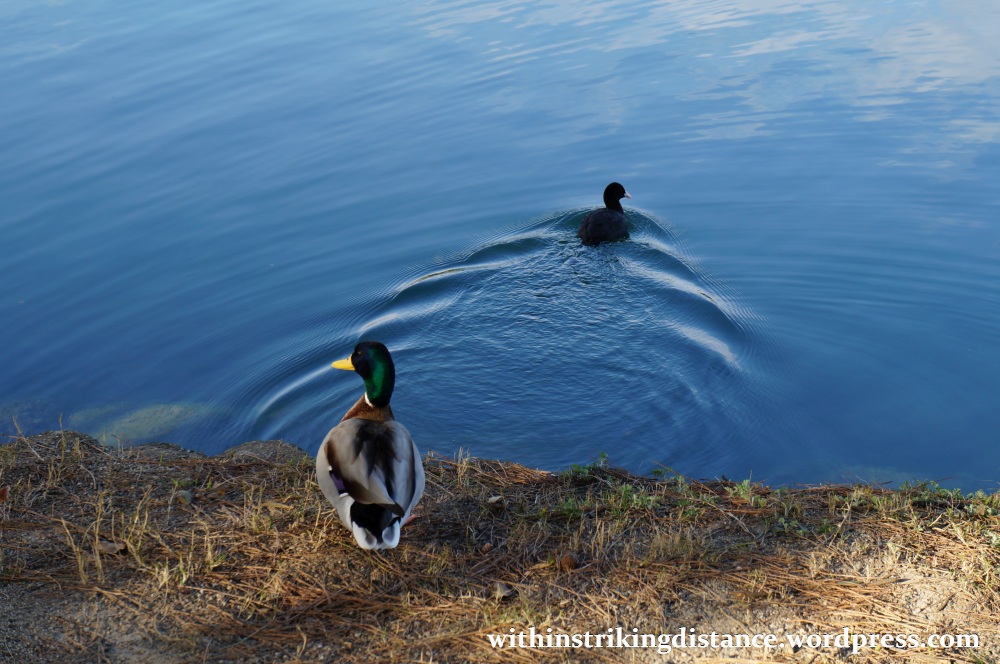

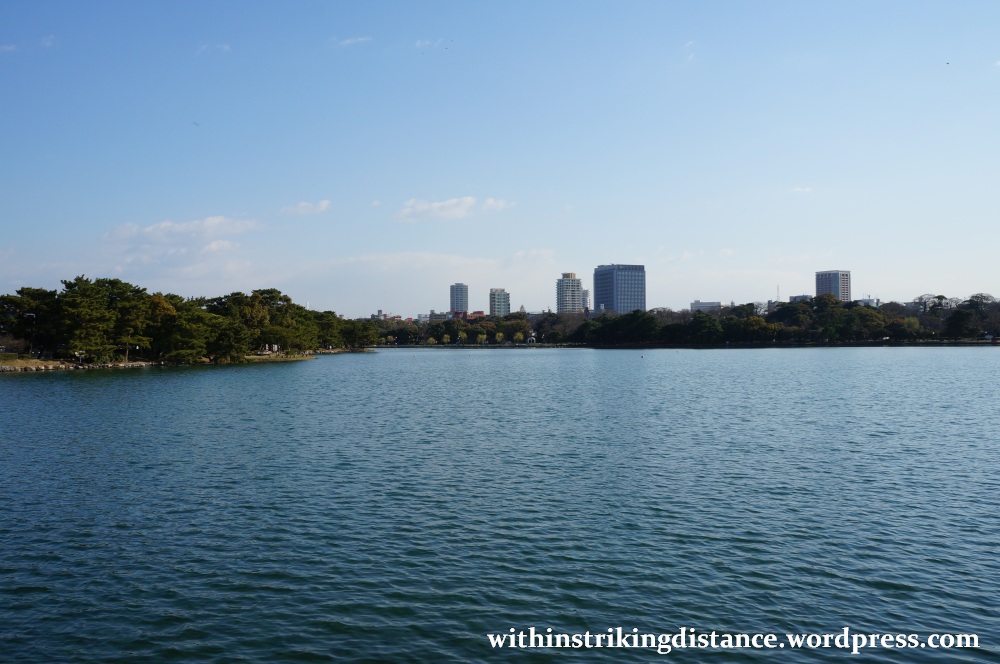
After my morning stroll, I returned to the city subway and headed for another station a few stops east of here, from where I was due to take a train on the first out-of-town excursion of this trip.
But we’ll talk about that in another post. (^_^)
To be continued.


Leave a Reply