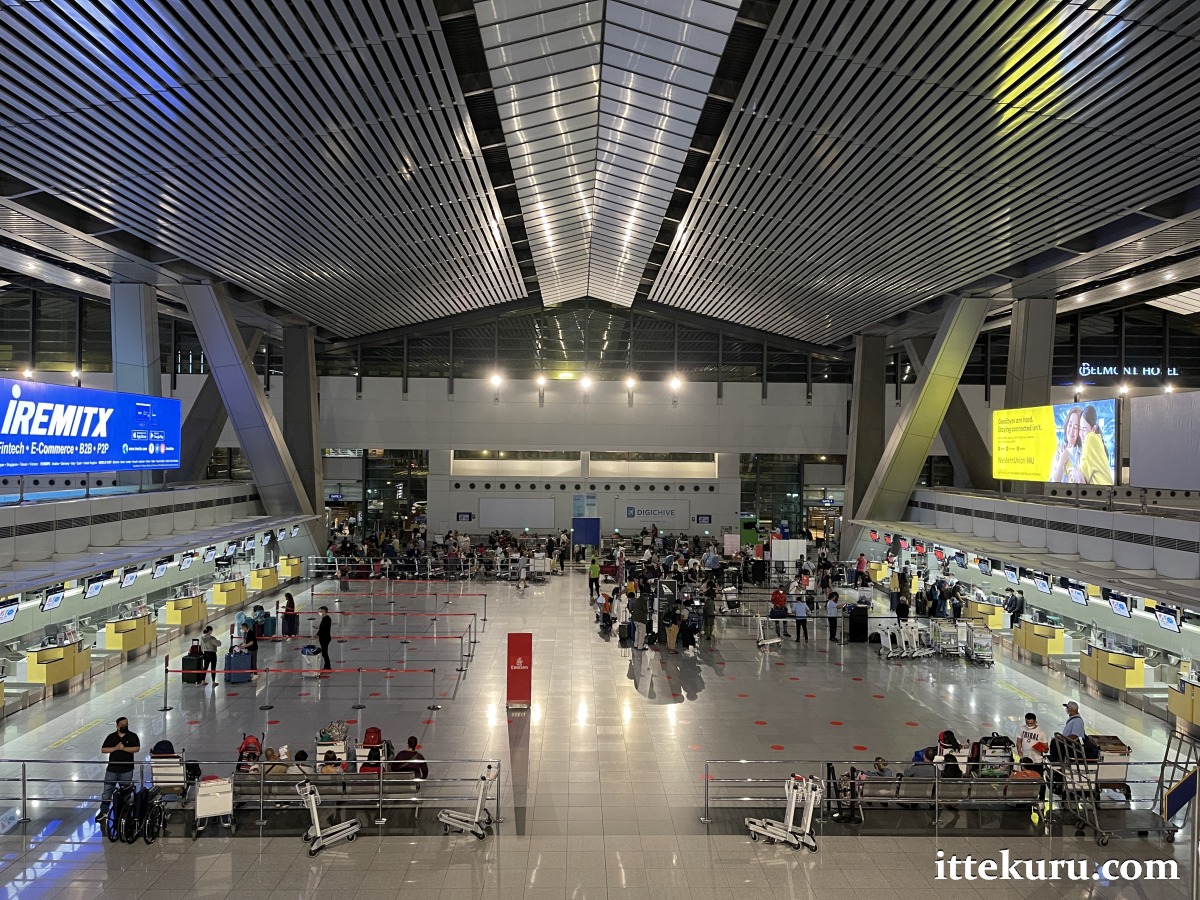
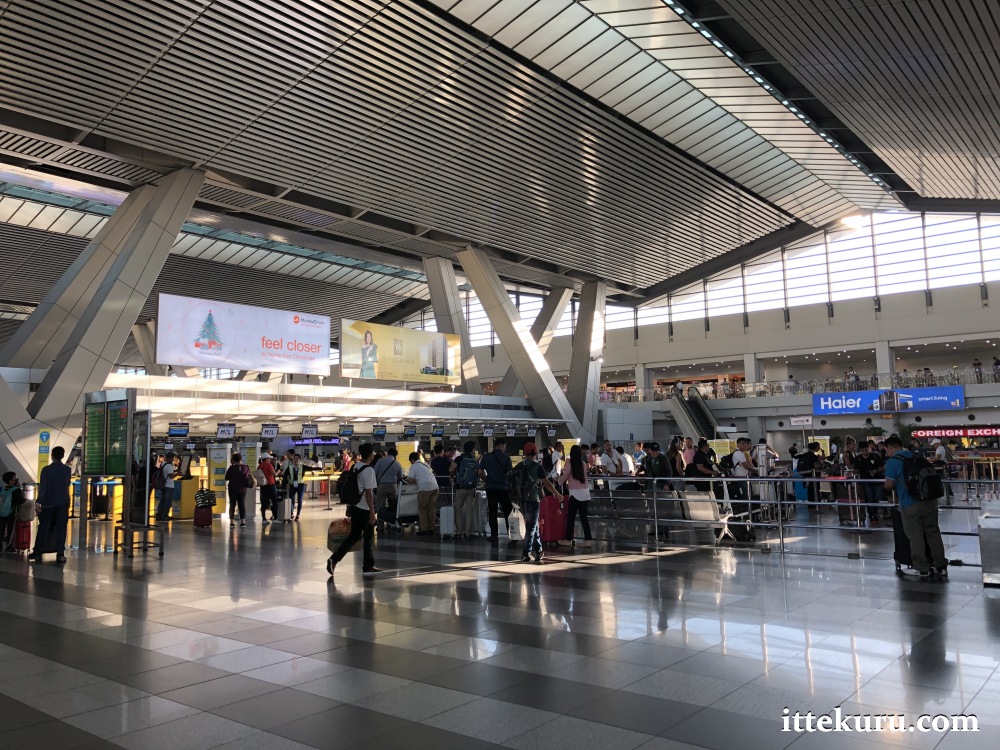
This Airport Guide covers the landside (public) zone of the departures level at Ninoy Aquino International Airport’s Terminal 3.
Post last updated from first-hand experience : 07 July 2024 (based on a 06 July 2024 departure)
Post last updated using other information : 07 July 2024
NOTE: This article offers general guidance and is not intended to be a definitive resource. The facilities and procedures discussed here are subject to change without prior notice.
Let’s explore the landside (public) area at Terminal 3 (T3) of Ninoy Aquino International Airport (common abbreviation: “NAIA” / IATA code: MNL) – the main airport serving Greater Manila in the Philippines. For the purposes of this guide, “landside” means everything before outbound immigration and security.
For Terminal 3’s airside areas (i.e., the passengers-only sections after outbound security): click here for international and click here for domestic.
For arrivals at Terminal 3: click here for international and click here for domestic.
For a broader overview of Terminal 3, click here.
To learn more about the airport as a whole, click here.
CONTENTS
- Entrances
- Main departures hall (Level 3)
- Check-in counters
- Travel tax (international flights only)
- Other facilities
- Shops and restaurants (Level 4)
- Airport hotel (Level 4)
- Pandemic-related measures
ENTRANCES
The departures level of T3 has six main entrances, all facing the upper deck of the terminal’s access road.
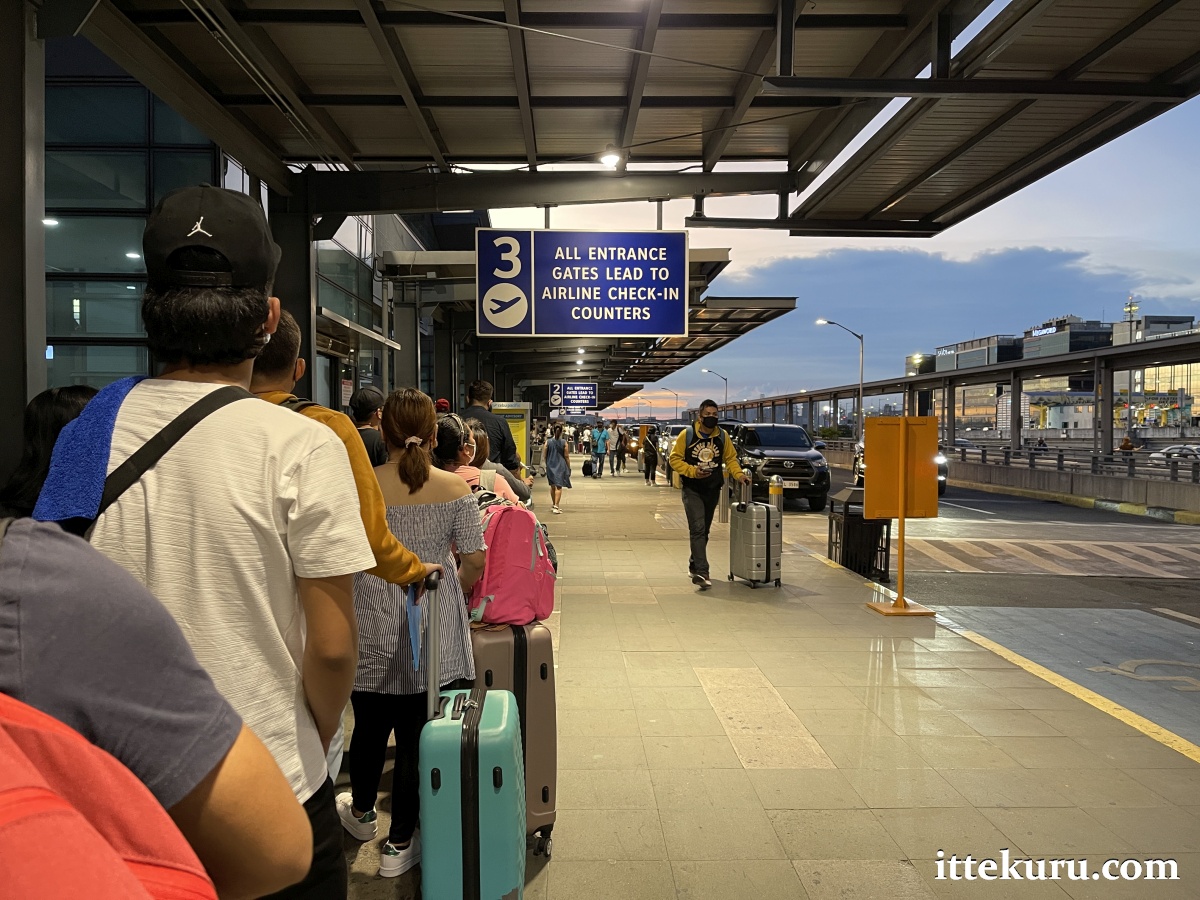
Only passengers are allowed near the check-in counters. Guards posted at the entrances next to the check-in hall will ask to see your ticket before allowing you through.
Passengers leaving their cars in T3’s parking building can use a side door that leads into the departures hall.
It’s also possible to enter via the Runway Manila footbridge that connects T3 to the nearby Newport City leisure/hotel district. This path takes you into the public retail/dining zone on Level 4, from where you can take a lift or escalator down to the departures hall.
MAIN DEPARTURES HALL (Level 3)
The fringes of this cavernous space can be accessed by the general public, but the central area – where the airline counters are located – is for passengers only. Coming from the publicly accessible areas on either side, you’ll be asked to present travel documents before being allowed near the counters.
Check-in counters
The domestic counters are in the northern half of the main hall, whilst those serving international flights are in the southern half. (There is no physical separation between domestic and international in the landside zone.) Refer to the flight information screens for specific counter assignments.
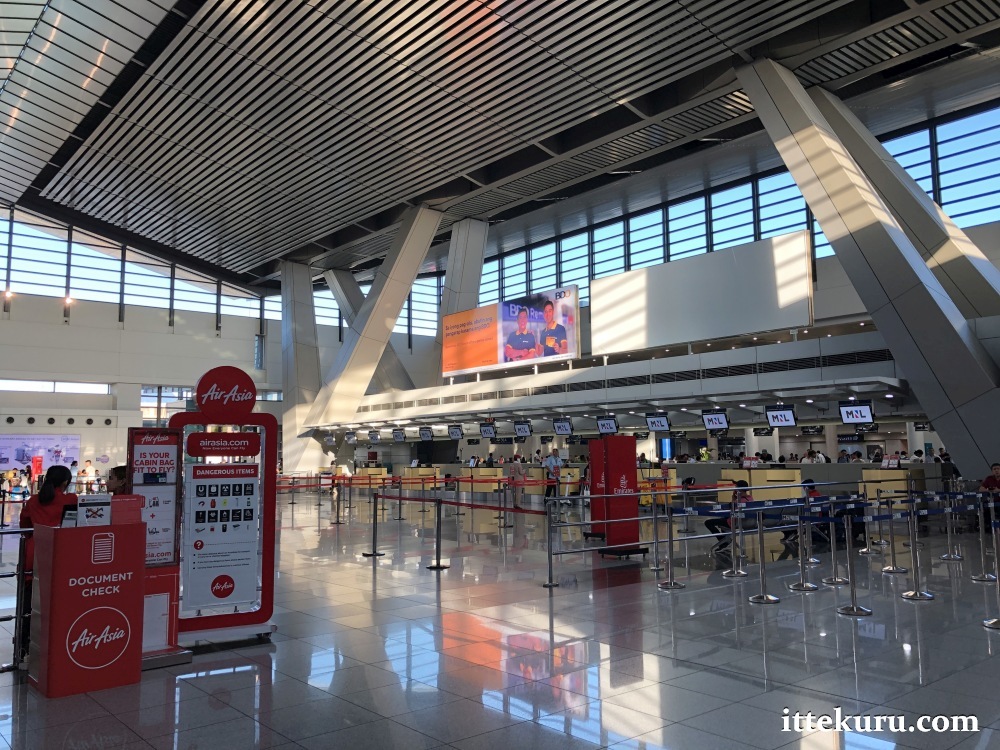

Check-in procedures and queueing arrangements – such as priority lanes for premium classes or passengers with special needs – will vary depending on the airline.
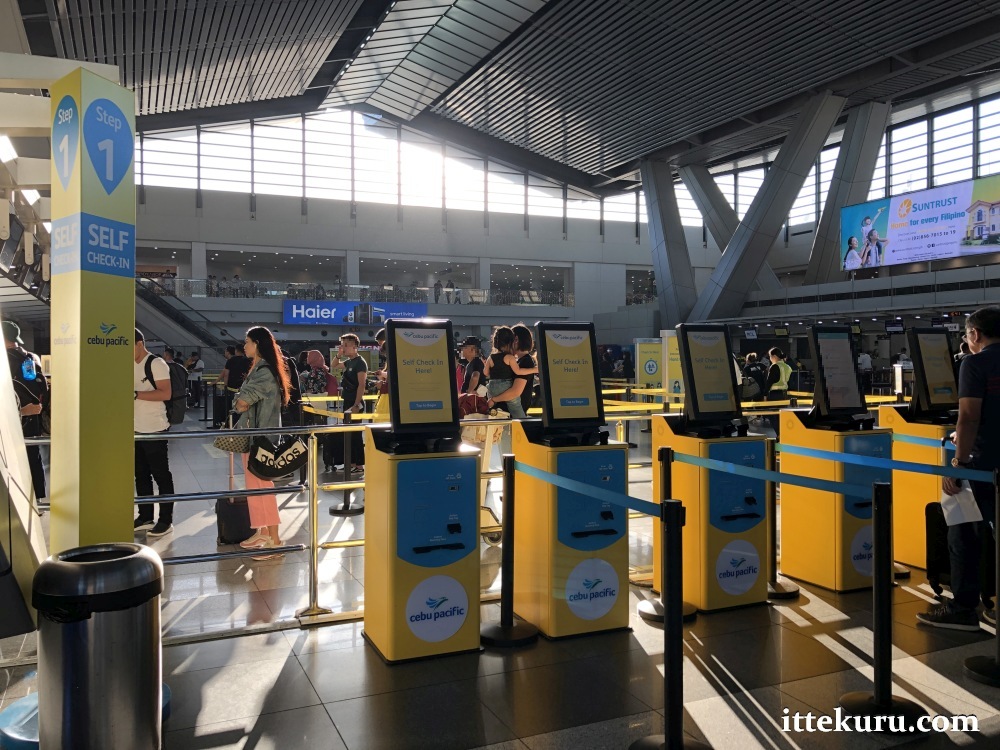
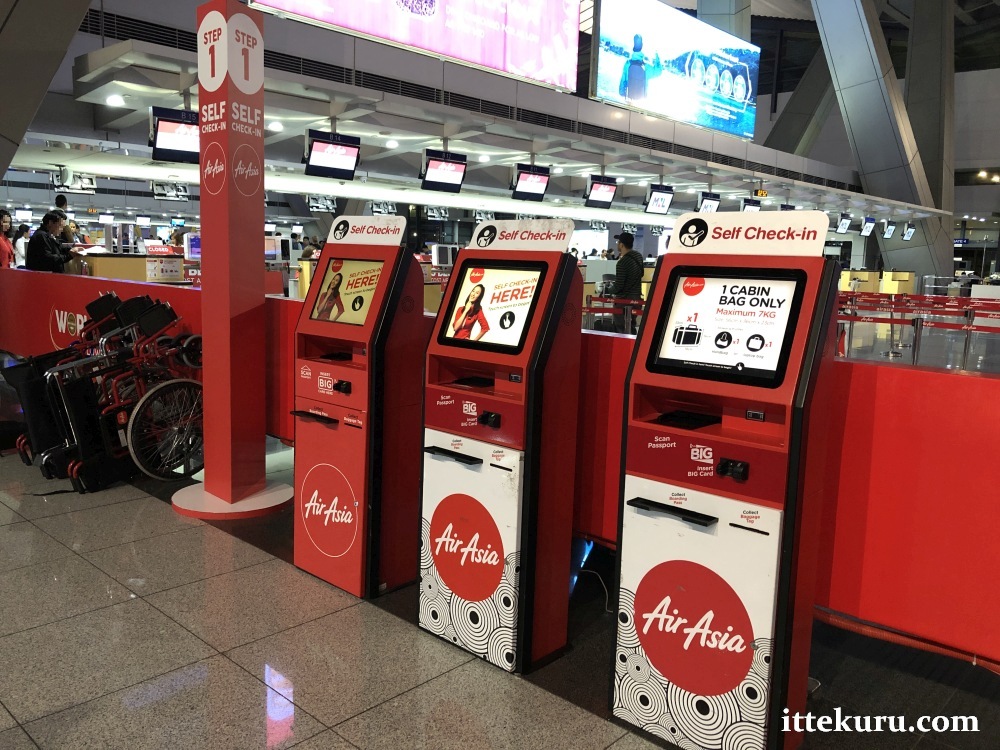
Self-check-in kiosks are available for some carriers, but note that travel document inspection is required for international flights. When flying overseas, using these kiosks or checking in online won’t necessarily spare you from having to queue up at a counter for verification (whether or not you’ve got baggage to check in). Enquire directly with your airline to confirm what arrangements apply in each specific case.
Travel tax (international flights only)
Residents of the Philippines must pay a “travel tax” of PHP 1,620 every time they fly out of the country in economy or business class. A higher rate of PHP 2,700 applies to first-class tickets. Certain travellers qualify for reduced rates or exemptions; refer to the TIEZA website for details.
***NOTE: Non-residents are NOT subject to the travel tax.***
Some airlines and travel agencies include the tax outright or offer the option of prepaying at the point of booking. (A direct online payment option is also available.) Check with your airline or agent to confirm if the price you’ve paid includes this charge.
If you’re subject to the duty and haven’t paid it in advance, you’ll need to visit the Tourism Infrastructure and Enterprise Zone Authority (TIEZA) counter at the airport and settle what’s owed before the airline can issue your boarding pass.
The travel tax is NOT the same as the passenger service charge (PSC) levied on airport users. The PSC for MNL is routinely included in the price of ordinary tickets and doesn’t have to be paid separately at the terminal.
T3 has multiple travel tax counters located within the check-in hall.
Other facilities
There are several cash machines (ATMs) and bureaux de change (money changers) within the check-in area.
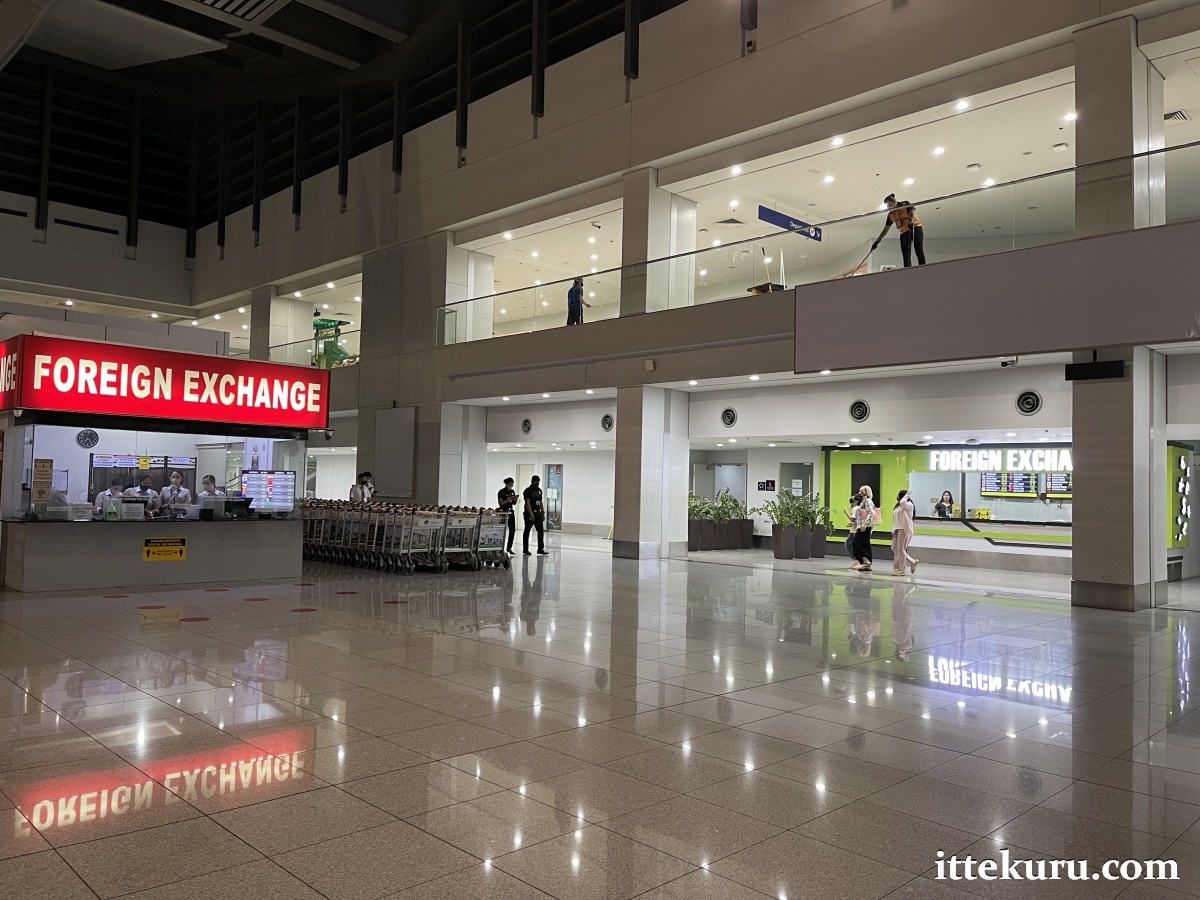
You’ll need to go outside the enclosure – either to the fringes of the main hall, or up to Level 4 – for other amenities and services.
SHOPS AND RESTAURANTS (Level 4)
The retail zone overlooking the main hall offers an assortment of dining and shopping options.
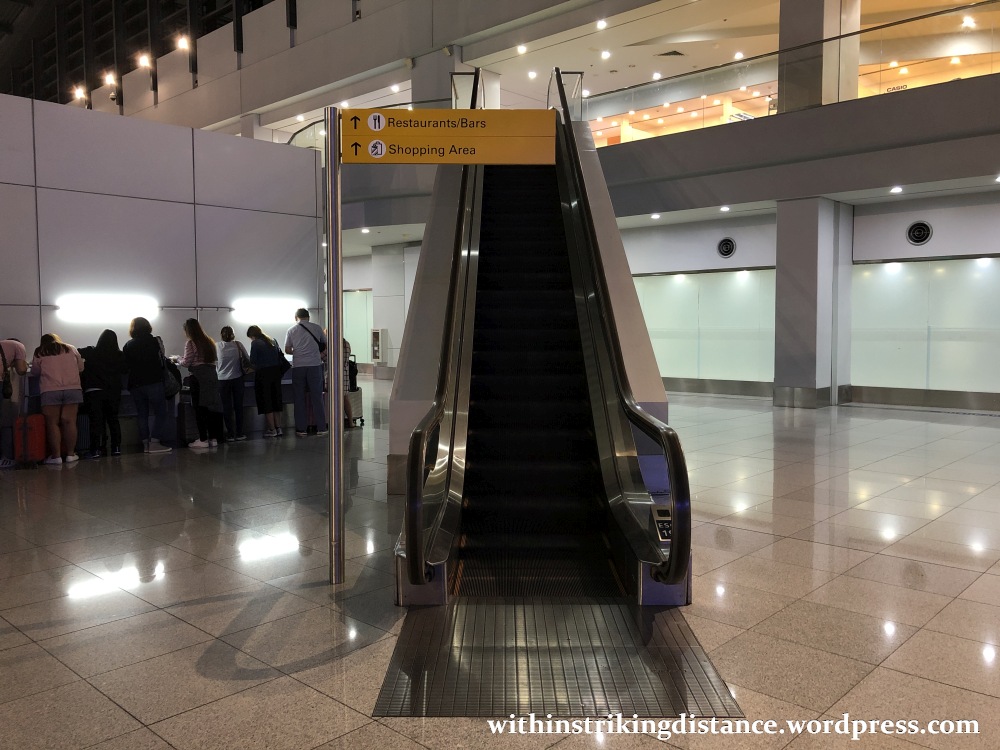
The shops and restaurants on Level 4 are accessible to both passengers and the general public. However, only passengers can use the middle escalators directly connecting the retail zone and the central check-in area. Security personnel posted at the top of these escalators will inspect your travel documents before allowing you through.
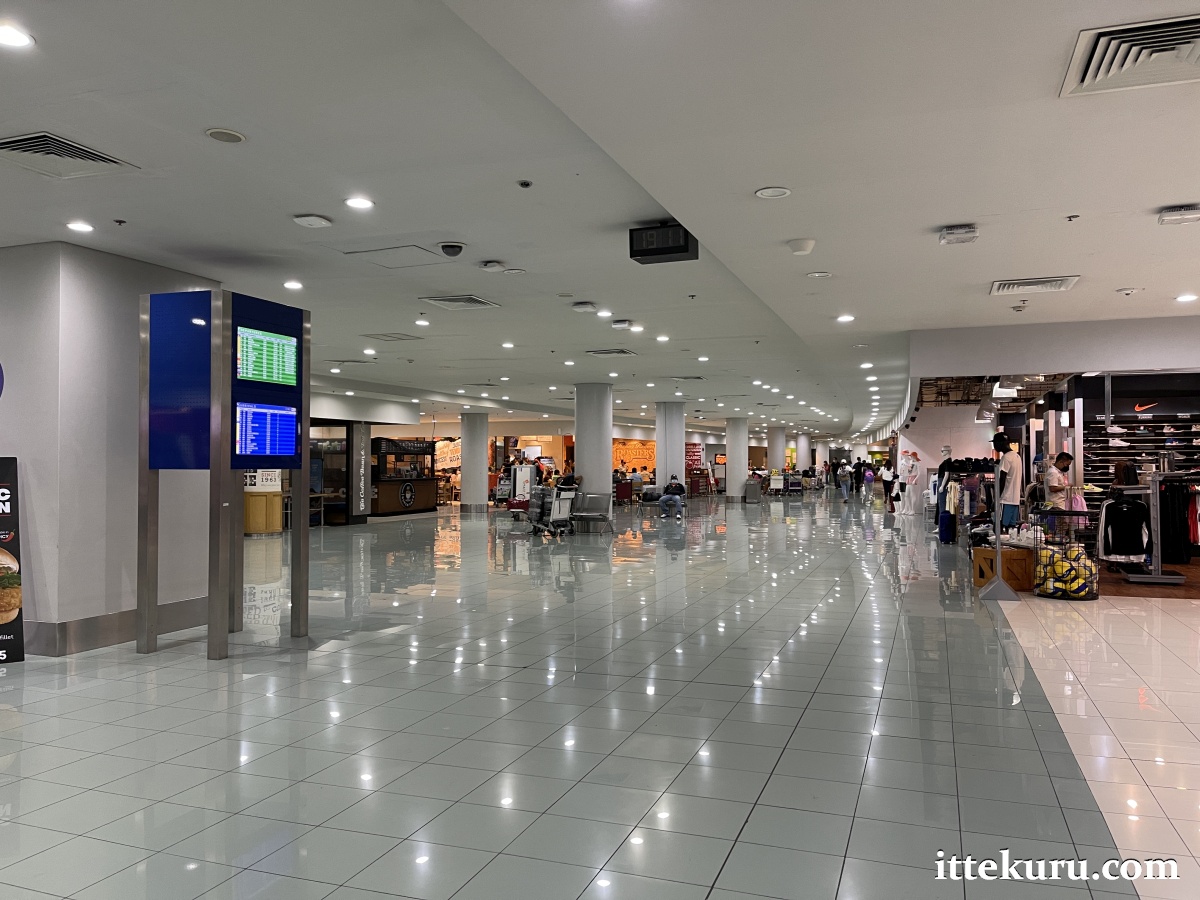
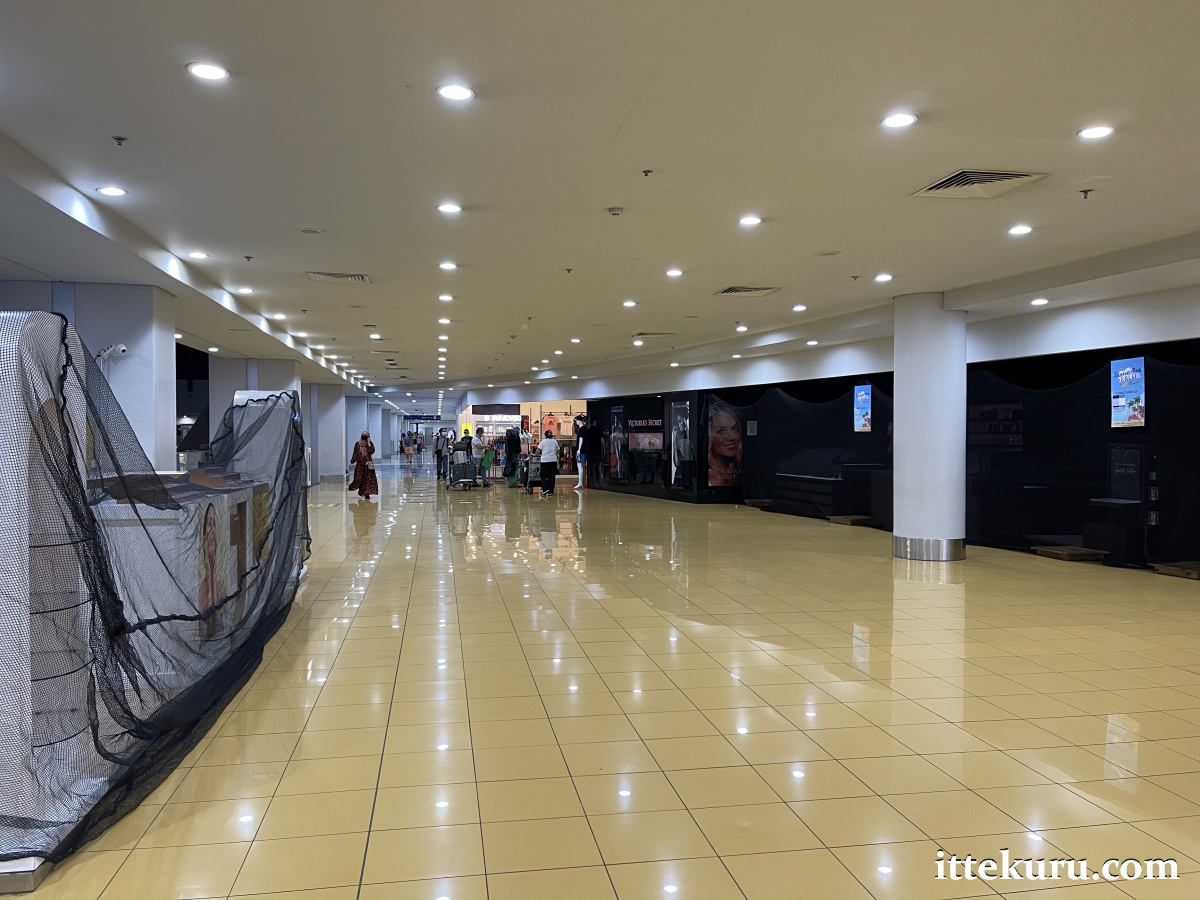
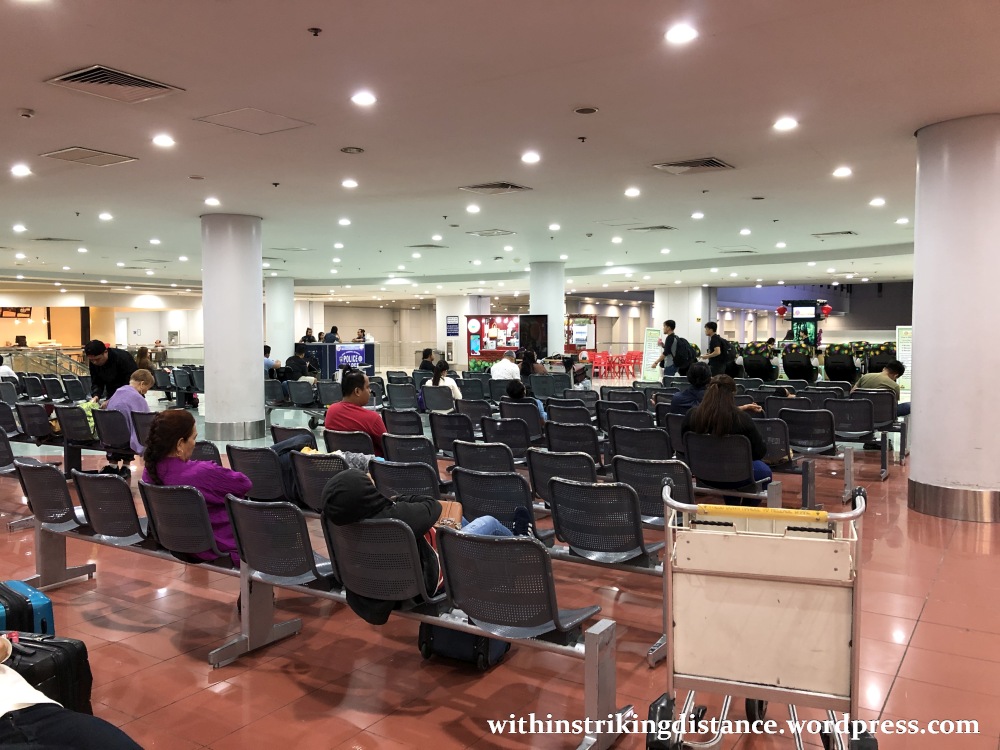
There’s also additional seating available on this floor, in case the limited space down on Level 3 is mostly taken up or too crowded for comfort.
AIRPORT HOTEL (Level 4)
There’s no full-service hotel on the premises, but very basic accommodations are available at The Wings Transit Lounge (official site / TripAdvisor reviews / Facebook). The options include recliners, Japanese-style capsules, and private rooms fitted with bunk beds. Shower facilities are shared.
Bear in mind that this facility is located within T3’s landside (public) area. It is NOT accessible to departing passengers who are already in the airside (restricted) part of the terminal.
If you’re after a better class of accommodation, you’ll need to look outside the airport. Cross the motorway in front of T3 using the Runway Manila footbridge – more about that in a separate guide – and stay in one of the full-service hotels sprinkled across the Newport City leisure district.
PANDEMIC-RELATED MEASURES
In 2023, the Philippine government scrapped its last remaining pandemic-era emergency directives. Public transport operates at full capacity and disease-control protocols – including mask wearing and social distancing – are no longer enforced.
Be aware that some establishments (such as healthcare facilities) might impose stricter requirements within their own premises and ask visitors to put on a mask before entering.
Ready to pass through immigration and security? CLICK HERE to read my separate Airport Guide documenting MNL T3’s INTERNATIONAL airside zone.
Travelling within the Philippines? CLICK HERE to read my separate Airport Guide covering MNL T3’s DOMESTIC airside zone.
Like what you’re reading? Buy me a coffee!

 Within striking distance
Hi can I ask a question?
I’m coming from Doha to Manila by Qatar Airways. My arrival time is 16:10. And my domestic flight is 6:45 in the morning. Can I sleep or stay inside the airport? And also my son will come,can I pick him outside the airport and go back?
My apologies for the late response, I’ve been out travelling for a month and wasn’t actively keeping tabs on comments.
Although this reply is probably too late to be of use, since you’re arriving from overseas and transferring to a domestic flight, the most likely scenario is that you’ll have to pass through quarantine/immigration/customs and formally enter the Philippines after your flight from Doha. Then you’ll need to check your baggage in again for the domestic leg the next morning.
During that interval, you might consider using the Wings Transit Lounge (4F, on the level above the check-in counters) to get some sleep ahead of your domestic flight the next morning. (Alternatively, cross the Runway Manila pedestrian bridge over to the Newport City development and stay in an upscale hotel there, like the Belmont.) Since that level of the terminal is accessible to the general public, you can of course meet your son there before going back into the secure departures zone for the domestic flight.
This is assuming your international and domestic flights both arrive and depart at Terminal 3 (which Qatar uses). If your domestic flight leaves from another terminal – say, Terminal 2 if it’s a PAL flight – then you’ll also need to factor transportation time into the equation.
Cheers.
How can we request for a pass through NAIA to pick up our loved one’s?
There’s no need to request a pass if you’re fetching someone from the airport. Private vehicles can freely access the road that runs alongside the arrivals level.