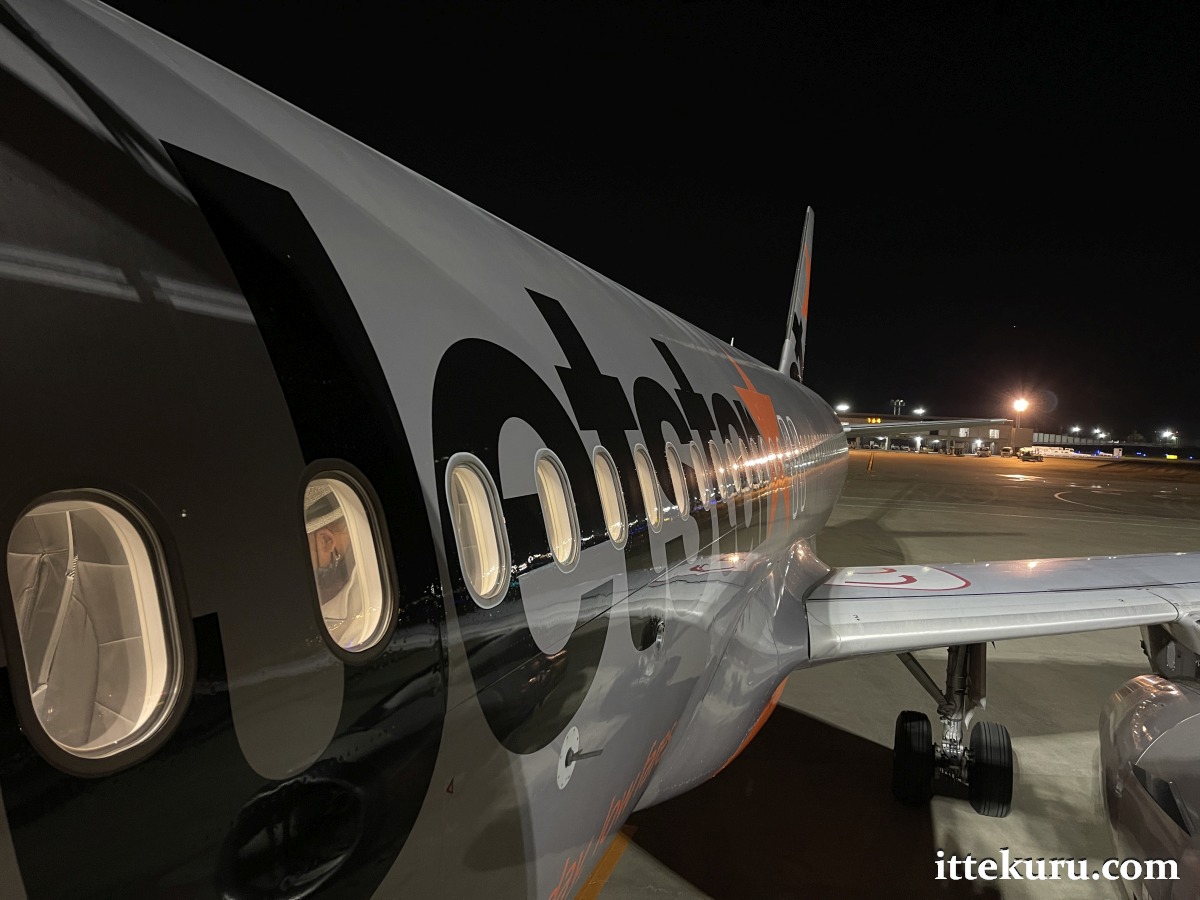
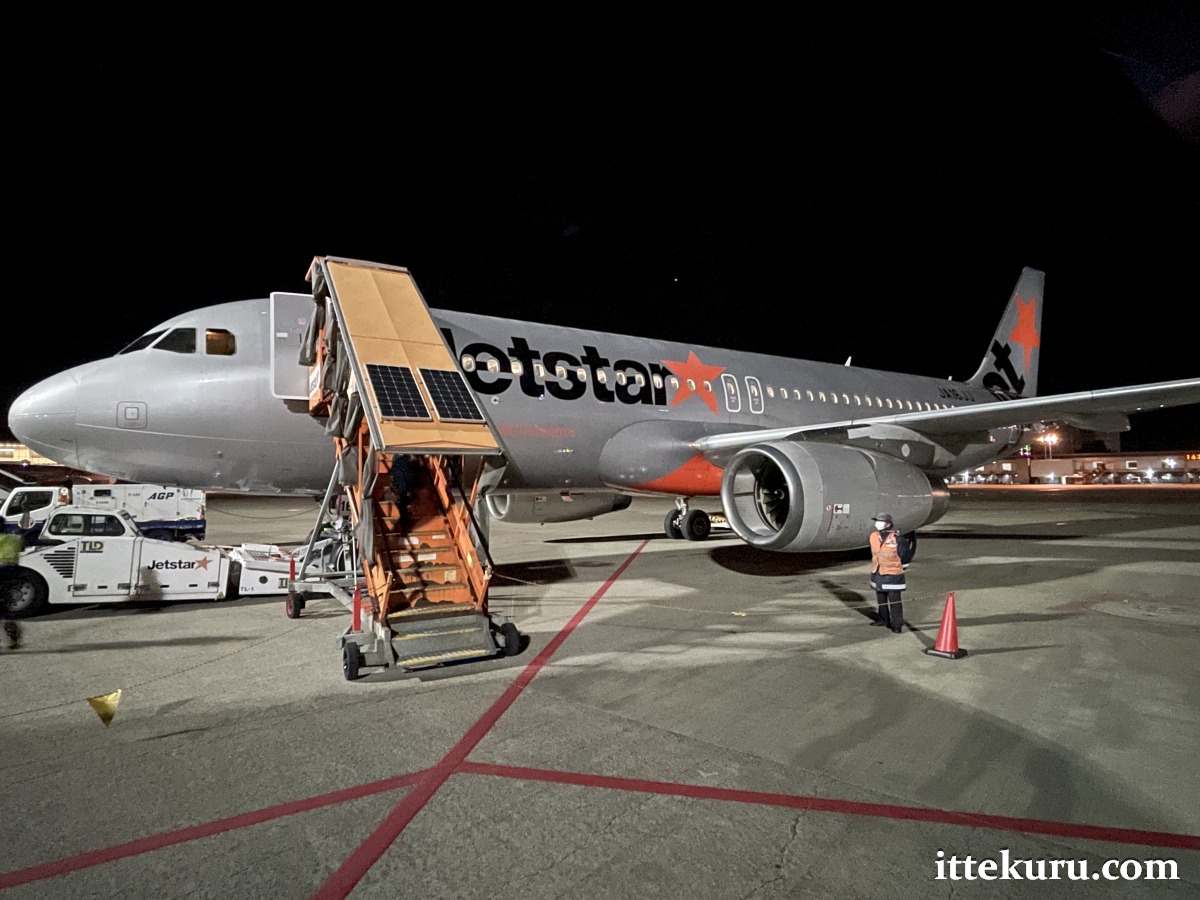
In today’s Flight Report, we’ll continue the tale of my round-trip March 2023 LCC journey with Jetstar Japan. This time, we’re focussing on the homebound leg from Tōkyō to Manila.
Welcome aboard Jetstar Japan flight GK 41.
Note: The information set out here pertains only to the specific flight reviewed. Cabin equipment, amenities, meal options and so on may be different on previous or future flights, even if operated by the same airline on the same route and/or under the same flight number.
For the sake of brevity, IATA airline and airport codes have been used throughout this report in place of full names (e.g., “GK” instead of “Jetstar Japan”; “NRT” instead of “Narita International Airport”).
This review covers the second, homebound leg (NRT-MNL) of a round-trip MNL-NRT-MNL journey. Click here to read my review of the first, outbound leg (MNL-NRT).
ROUTE MAP
OVERVIEW
Note: All times are local. There is a 1-hour time difference between Manila (GMT+8) and Tōkyō-Narita (GMT+9).
Flight details
Airline and flight number : Jetstar Japan (GK) 41
Route : Tōkyō-Narita, Japan (IATA code: NRT) to Manila, Philippines (IATA code: MNL)
Route type : International
Date : Friday, 31 March 2023
Scheduled departure time (NRT) : 19:50
Actual departure time (NRT) : 19:50 [estimated]
Scheduled arrival time (MNL) : 23:40
Actual arrival time (MNL) : 23:42 [estimated]
Equipment and cabin
Aircraft : Airbus A320-200
Manufacturer : Airbus
Registration number : JA16JJ
Passenger capacity : 180 Economy
Travel class flown : Economy Class
Here’s JA16JJ on the apron next to NRT T3, getting ready to depart as flight GK41.

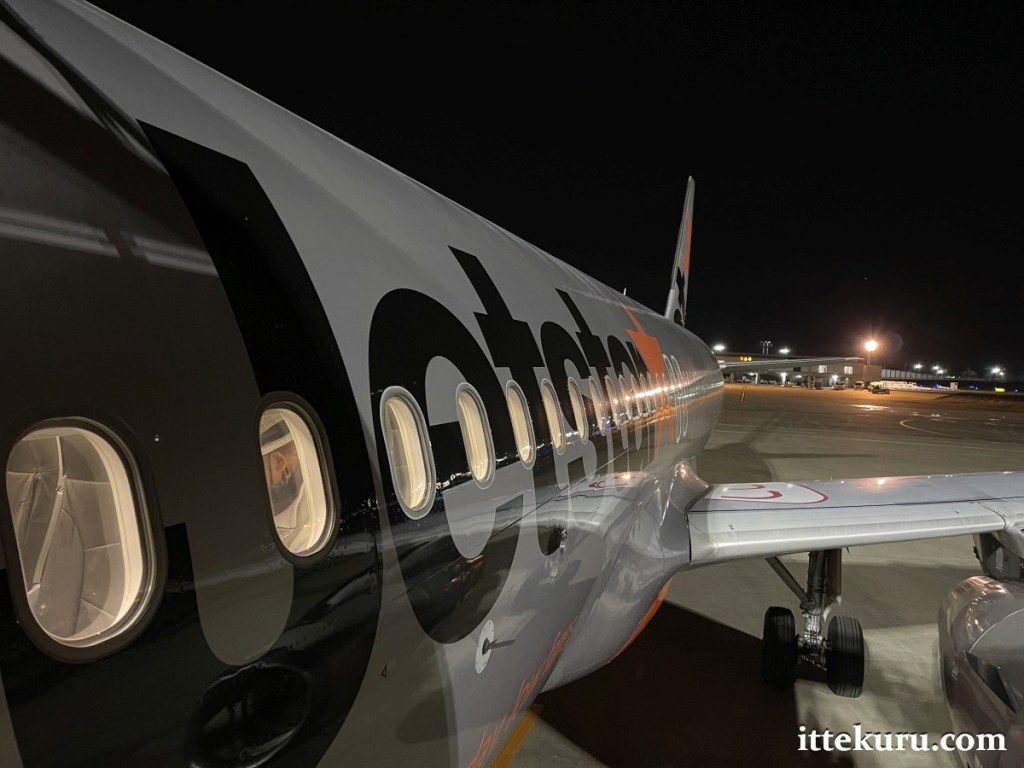
Delivered in September 2013, this Airbus A320 was a little under 10 years old on flight day. Not the newest member of the fleet – and certainly older than the one I rode on the previous leg – but still in decent, well-maintained condition both inside and out.
BAGGAGE
GK’s basic “Starter Fare” comes with 7 kg of carry-on baggage allowance, with the possibility of purchasing an additional 7 kg (subject to availability). Checked baggage can be purchased in ascending tiers up to a maximum of 40 kg.
For complete details on GK’s baggage rules – including piece limits/restrictions that must be adhered to on top of weight limits – please refer to your ticket and the airline’s official website.
AT THE AIRPORT
Origin
GK flights out of Tōkyō are based at Terminal 3 (T3) of Narita International Airport (IATA code: NRT).
Designed from the ground up as a budget terminal, T3 hosts some – but not all! – of the LCCs that serve NRT. Needless to say, this smaller facility offers less in the way of shopping, dining, and other amenities than the airport’s two full-service terminals.
You can read more about my experience of using NRT T3 here.
Check-in and boarding
Nothing particularly stood out during the check-in process: queue, show passport, weigh luggage, receive boarding pass. Same old script, whether for this airline or its competitors.
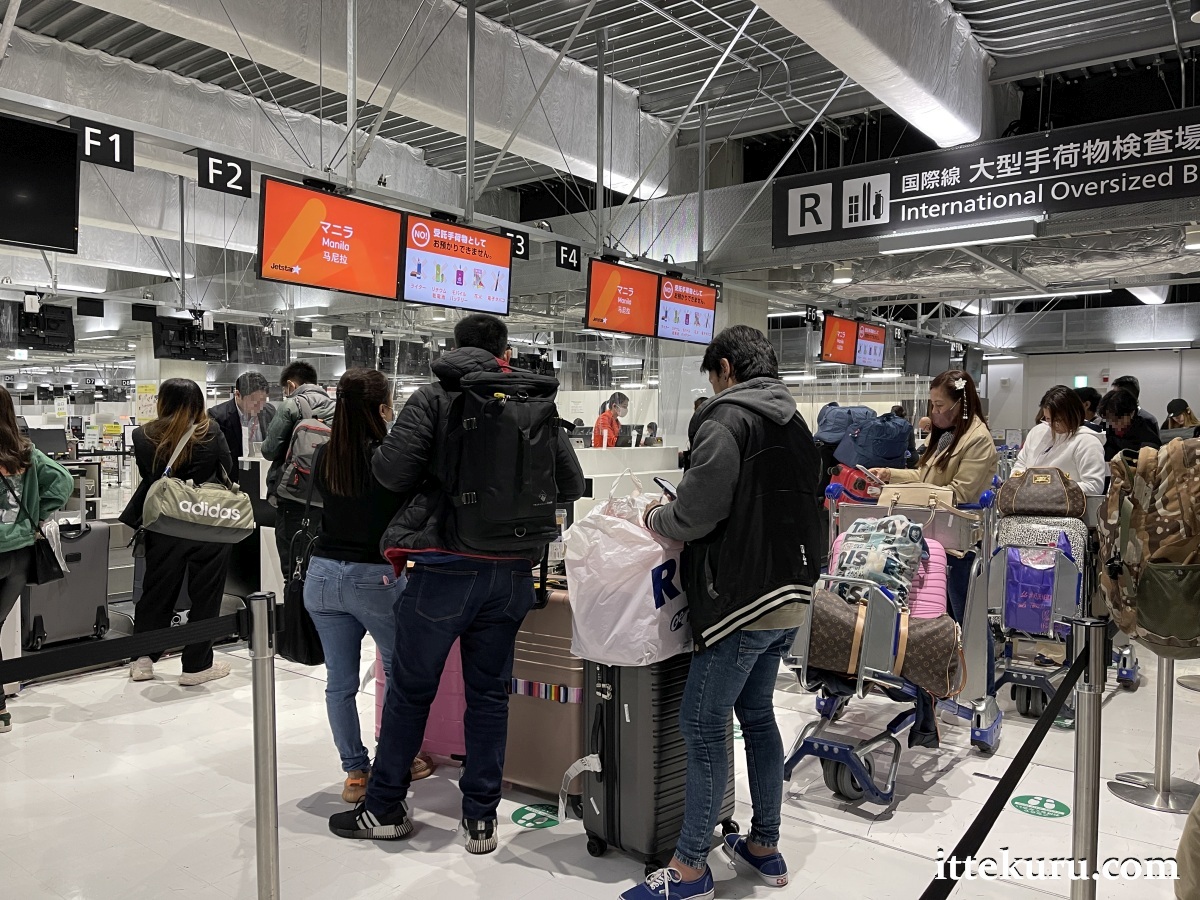
One thing that passengers need to be extra wary of is their baggage allowance. Limits tend to be strictly enforced, though how strictly might depend on various circumstances…including the counter agent’s mood. In any event, I’d advise caution given that GK is a budget airline and less likely to be forgiving of any excess.
Boarding was done from one of NRT T3’s bus gates. A shuttle brought us to the parking stand where our aircraft stood waiting, and we clambered aboard up a set of mobile stairs.
ONBOARD EXPERIENCE
Cabin interior and seating
The GK fleet consists almost entirely of Airbus A320-200 aircraft, each configured with a dense all-Economy cabin of 180 seats.
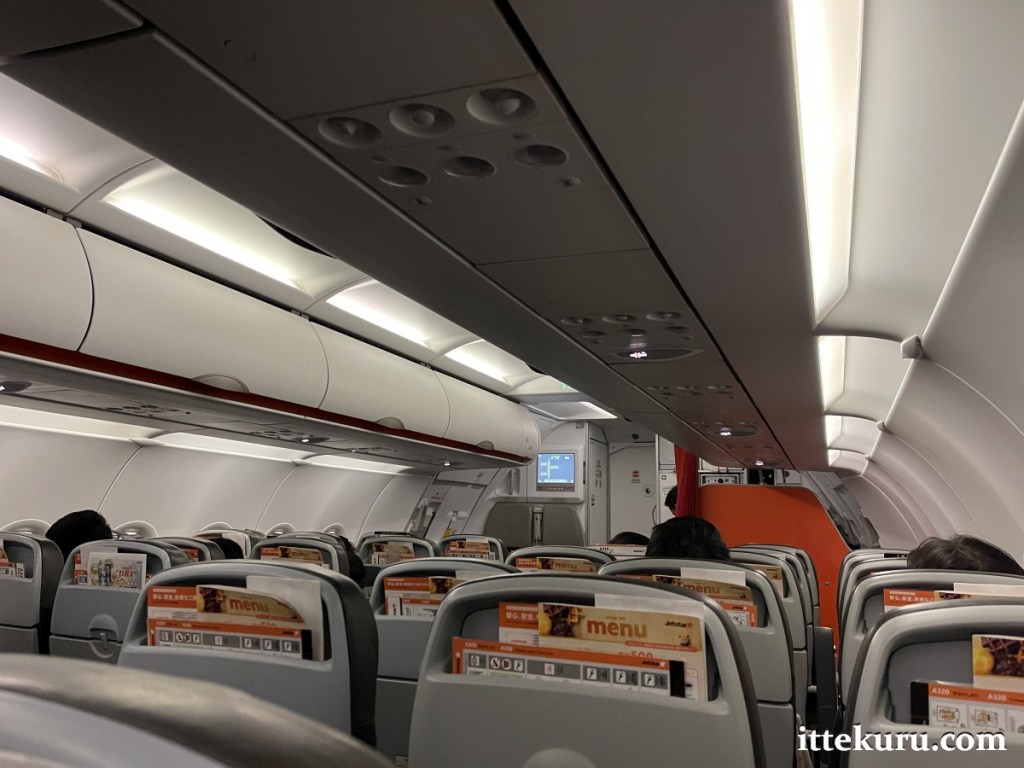
The leather-upholstered seats are 45.4 cm wide and feature an average seat pitch of 73.7 cm – or so says the official website. Considering that “average” implies the inclusion of extra-legroom bulkhead and exit row seats, the actual space one might expect to have in a standard seat will likely be less than the advertised figure.
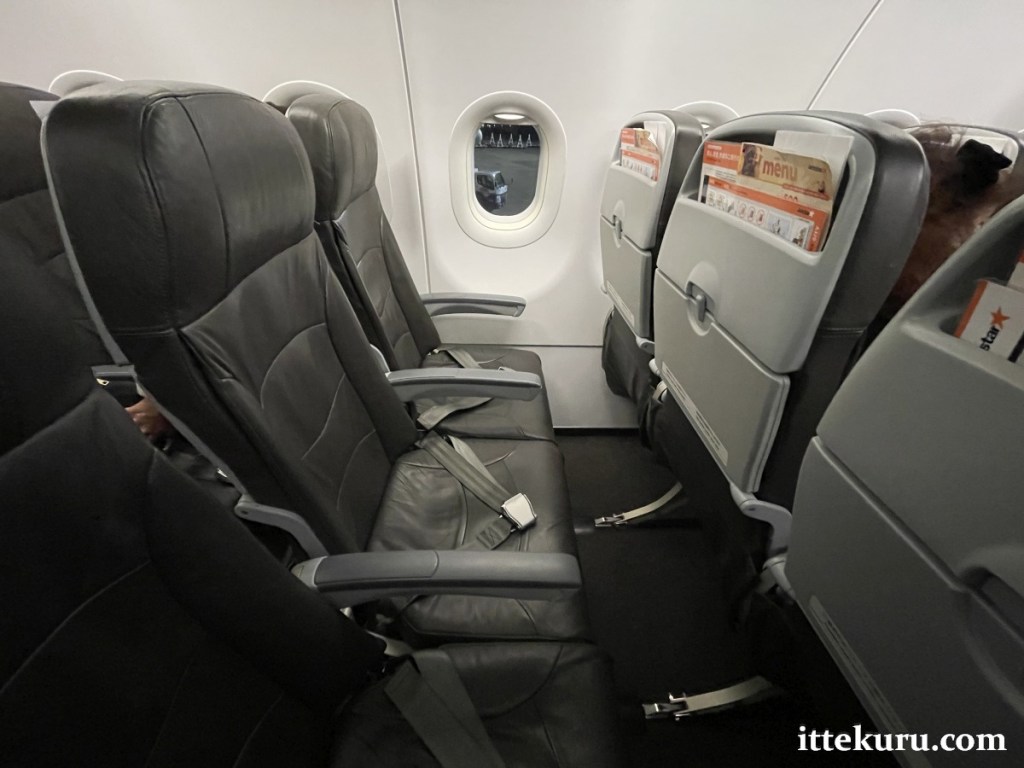

If you’re in need of more wiggle room, you’ll need to pay extra for a seat in the front row (door and bulkhead sides shown below) or the exit row.

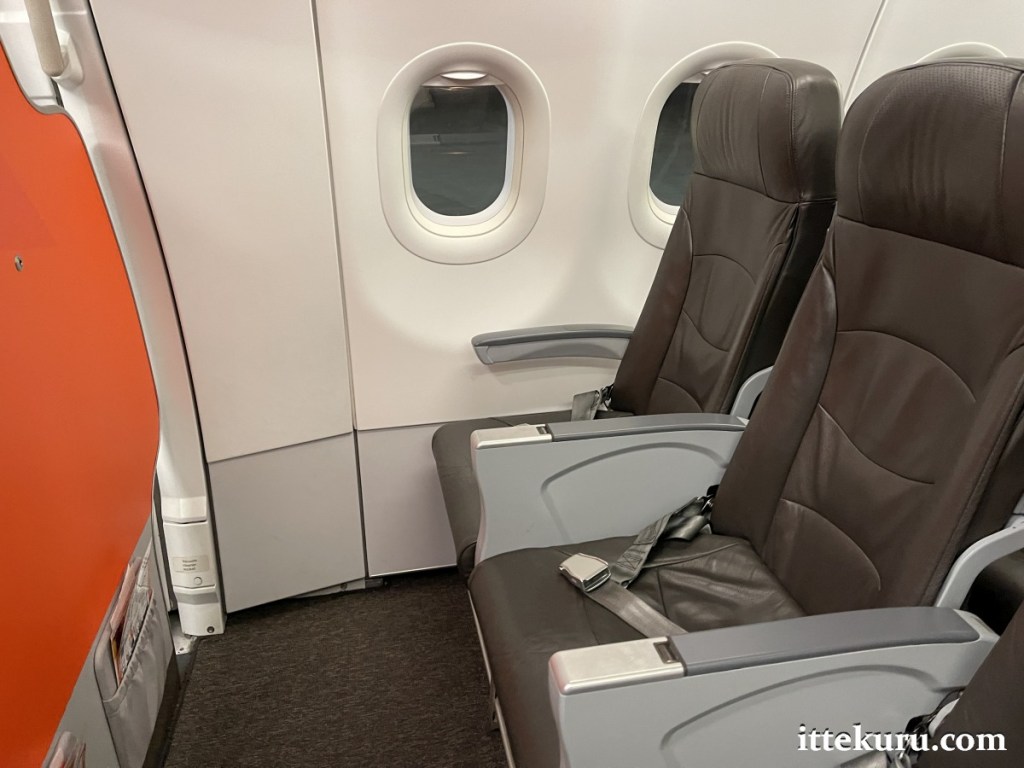
Frills such as in-flight entertainment are anathema to the low-cost carrier ethos. As such, the emptiness of the seat backs – each fitted only with a pocket and folded tray table – is far from surprising.

Not much to see up on the overhead panel apart from the usual bits and bobs. I do appreciate the adjustable air vents.

In-flight entertainment
You won’t find an IFE system on any of GK’s A320 aircraft. Not that you’ll hear me complaining (much) as this is within expectations for an LCC.
Side note: even though the wider Jetstar Group’s Boeing 787 Dreamliners are fitted with IFE, Economy Class passengers need to pay extra to access the system.
Catering
As is typical of an LCC, GK does not serve complimentary food and beverages to passengers on basic fares. Meals can be added at the point of booking or come bundled with higher-cost fare buckets.
Fancy a meal mid-flight? The airline offers a buy-on-board selection but this is limited to pastries and snacks (alongside hot and cold beverages). You can view menus for the different Jetstar Group airlines – GK included – on this page.
OVERALL IMPRESSION
Low-profile service for a low-level fare. Considering our on-time arrival and uneventful experience, I’d say that’s a fair trade.
Given the right price and schedule, I’d fly with Jetstar Japan again on this route.
Cheerio.
Like what you’re reading? Buy me a coffee!

 Within striking distance