

***IMPORTANT*** FROM 16 JUNE 2023 ONWARDS, MNL TERMINAL 2 WILL BE USED SOLELY FOR DOMESTIC ROUTES. INTERNATIONAL FLIGHTS RUN BY PHILIPPINE AIRLINES (PR) NOW OPERATE OUT OF TERMINAL 1. THIS POST WILL BE RETAINED FOR ARCHIVAL PURPOSES ONLY AND SHOULD NOT BE USED AS A REFERENCE.
This Airport Guide covers the airside zone – i.e., the restricted, passengers-only area after outbound immigration – of the international wing at Ninoy Aquino International Airport’s Terminal 2.
Post last updated from first-hand experience : 28 January 2023 (based on an 18 January 2023 departure)
Post last updated/reviewed using other information : 04 April 2023
NOTE: This article offers general guidance and is not intended to be a definitive resource. The facilities and procedures discussed here are subject to change without prior notice.
IMPORTANT UPDATE: All international flights operated by Philippine Airlines (PR) will move to T1 by 16 June 2023 (source). For more information, consult PR’s official website and verified social media channels.
In this post, we’ll explore the airside (restricted) area at Terminal 2 (T2) of Ninoy Aquino International Airport (common abbreviation: “NAIA” / IATA code: MNL) – the main airport serving Greater Manila in the Philippines. For our purposes, “airside” includes border control and all passengers-only sections beyond, up to the boarding gates.
To learn more about Terminal 2’s international landside area, read my separate report documenting what you can expect to see before immigration and security.
If you’re interested in Terminal 2 arrivals, click on this link to read my guide covering what passengers from overseas will encounter when entering the country.
For a broader overview of Terminal 2, click here to navigate back up to my portal post about the entire facility.
To learn more about the airport as a whole, click here to view my comprehensive guide to MNL.
IMPORTANT UPDATE: All international flights operated by Philippine Airlines (PR) will move to T1 by 16 June 2023 (source). For more information, consult PR’s official website and verified social media channels.
CONTENTS
- Immigration and Security
- General Layout
- Shopping, Dining, and Other Facilities
- Lounge
- Boarding Gates
- Pandemic-Related Measures
***IMPORTANT*** FROM 16 JUNE 2023 ONWARDS, MNL TERMINAL 2 WILL BE USED SOLELY FOR DOMESTIC ROUTES. INTERNATIONAL FLIGHTS RUN BY PHILIPPINE AIRLINES (PR) NOW OPERATE OUT OF TERMINAL 1. THIS POST WILL BE RETAINED FOR ARCHIVAL PURPOSES ONLY AND SHOULD NOT BE USED AS A REFERENCE.
IMMIGRATION AND SECURITY
After completing all check-in formalities, you can proceed to the next step: outbound immigration.
The international wing of T2 has two sets of outbound immigration counters, one at either end of the check-in hall. The “A” zone (right of the check-in counters) is for Philippine passport holders. The “B” zone (left of the check-in counters) is for foreign passport holders as well as Filipino citizens travelling with them.
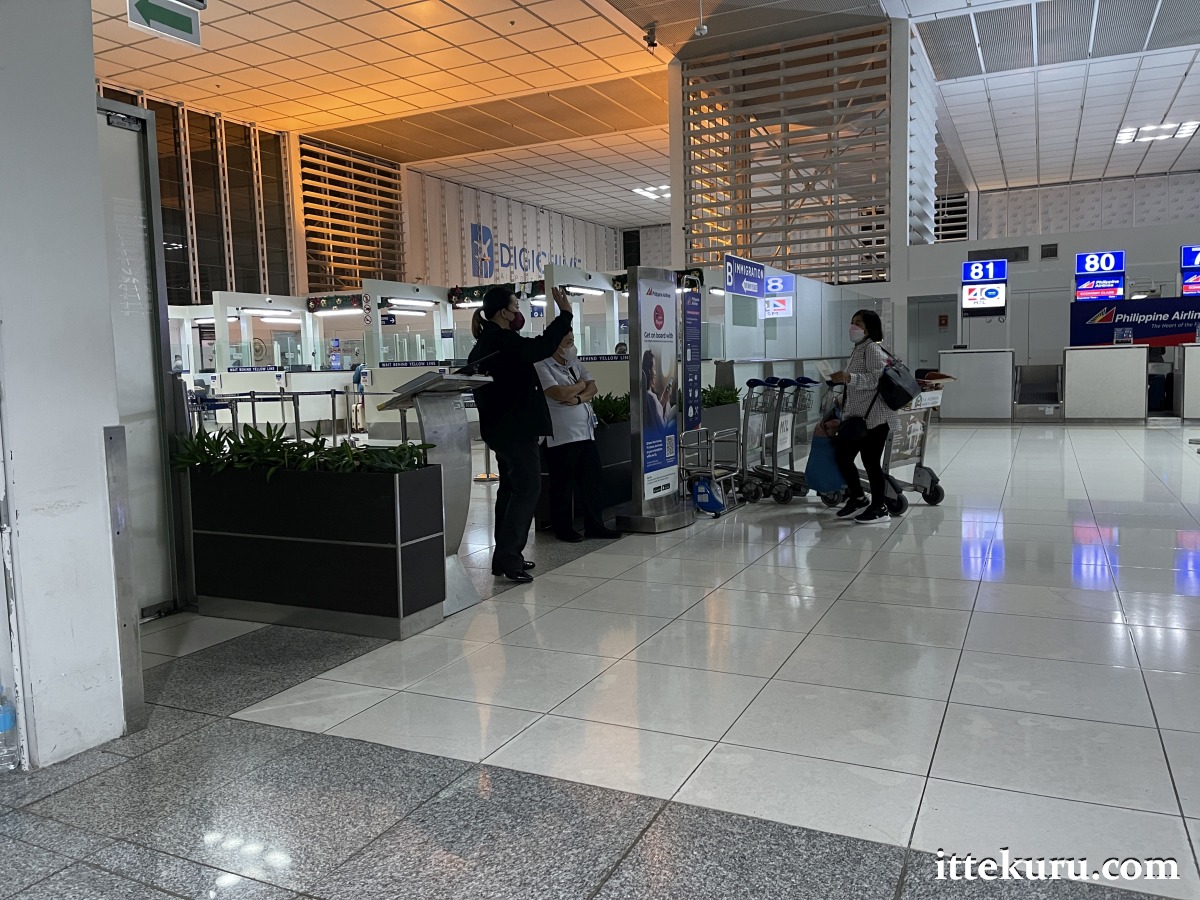
Outbound border control is fairly straightforward – that is, if you’re a leisure traveller. Unless anything regarding your trip warrants closer inspection, the process generally runs thus for ordinary holidaymakers:
- Complete a departure card. There are desks near the entrance to the immigration zone with blank forms that you can use (sample form shown below).
- Join the correct queue. As mentioned earlier, separate sets of counters are used for foreign passport holders and Philippine passport holders.
- Present your travel documents to the immigration officer. Most people will only need to submit their passport, boarding pass, and departure card.
- Have your picture digitally recorded.
- Answer questions if asked, which may or may not happen.
- Receive your duly stamped passport and boarding pass.
- Proceed to the security checkpoint.

If you’re a Filipino citizen travelling overseas for employment, or a first-time traveller with a brand-new passport (which might raise human trafficking concerns), or if other special circumstances exist, more documents may need to be furnished and the interview could take longer. A summary of additional requirements listed by travel purpose – which, I must emphasise, most leisure travellers will NOT be asked to present – can be found here.
After immigration comes security screening. The official website of the Office for Transportation Security sets out detailed guidance on what’s permitted in baggage (checked or carry-on).
One VERY IMPORTANT thing to bear in mind whilst undergoing security inspection: DON’T CRACK ANY JOKES ABOUT CARRYING A BOMB. Even a plainly humorous jest about having explosives on your person or in your luggage might land you in very, VERY deep trouble. The jocular nature of such a remark is no defence, and neither is the absence of an actual bomb upon subsequent inspection. At worst, you’ll face five years in prison and a fine to boot. DON’T DO IT.
GENERAL LAYOUT
Originally designed as a domestic terminal – and only later adapted to serve international flights – T2 lacks the space and infrastructure to support the facilities normally found in a major transport hub. The airside zone consists of a single level with shopping, dining, seating, and boarding areas all shoehorned into the same space.


SHOPPING, DINING, AND OTHER FACILITIES
T2’s departures lounge lacks the shopping-centre atmosphere that passengers are accustomed to seeing at other major international airports (including at MNL’s own Terminal 1 and Terminal 3). Because of the building’s limited interior footprint – much of which is given over to seating – there simply isn’t enough space to accommodate more than a basic range of retail and dining options.
The stores offer travel necessities, souvenirs, and other basic items, along with a very limited range of luxury goods. The small duty free area formerly found in the middle of the hall was dismantled during the pandemic, and the space repurposed for a quarantine screening checkpoint.
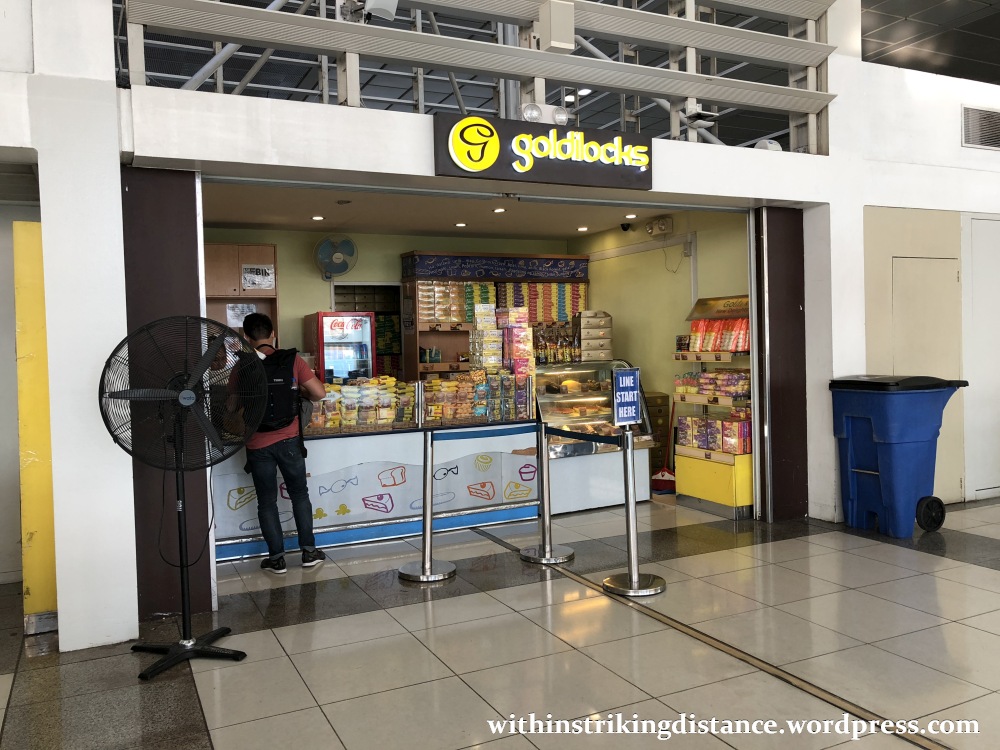
The following pictures of shops were taken during one of my pre-pandemic trips a few years ago, but these still paint an accurate picture of what you can expect to see at T2.
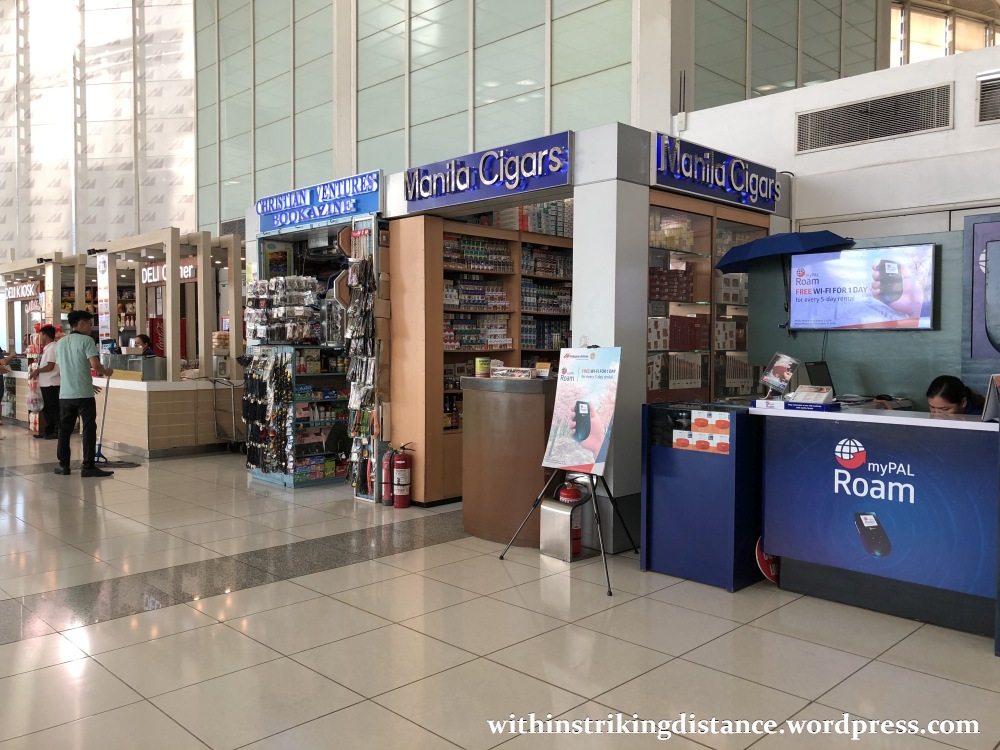

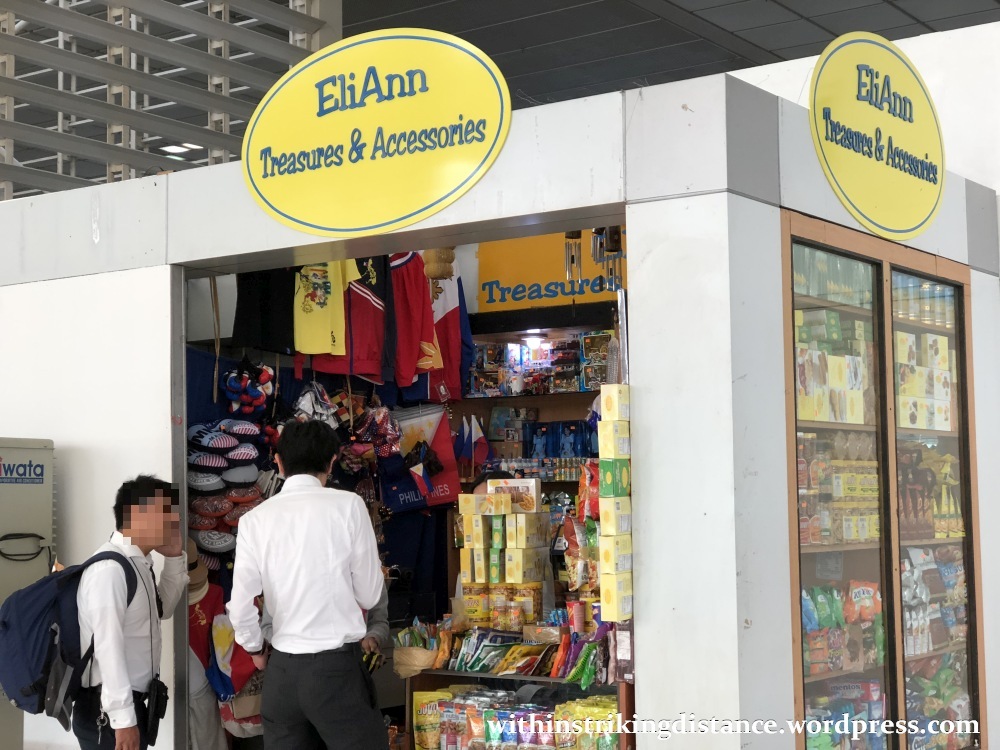
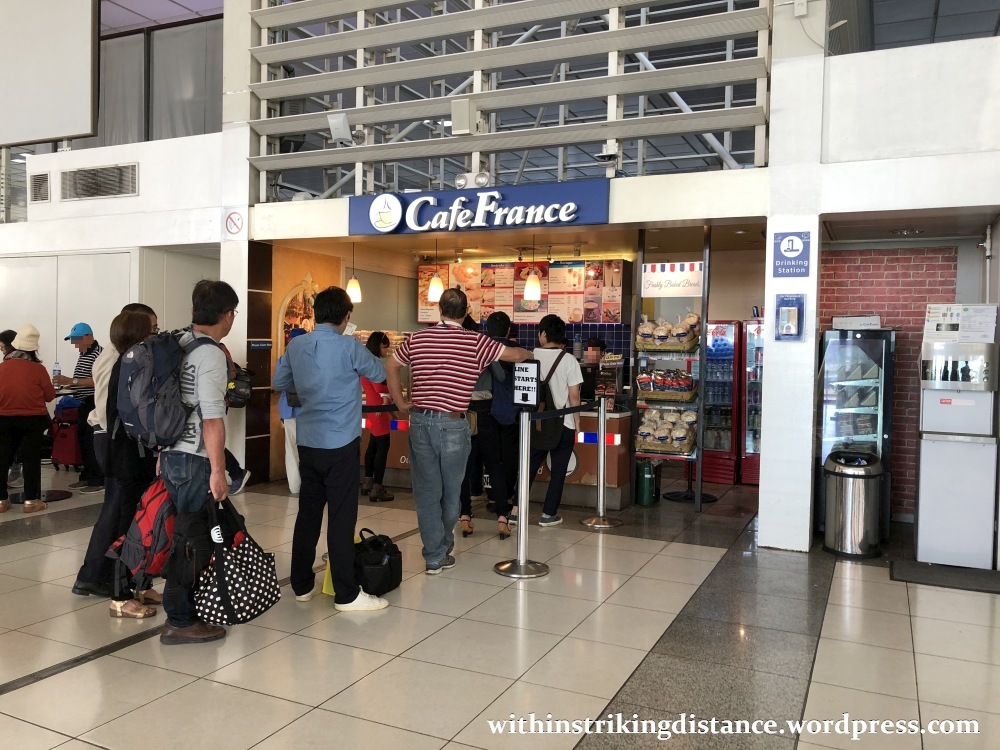
Where food and beverage choices are concerned, the offering is limited to kiosks serving snacks and packaged meals, most of which are cold or reheated rather than freshly prepared. There is no full-service restaurant anywhere in the airside zone, and the food kiosks lack their own dedicated dining spaces: everything is meant to be taken away for consumption at nearby tables or in the general seating area.
As with the shop pictures shown above, these next few images of food kiosks date from before the pandemic. However, they give a good idea of the sort of options currently available.

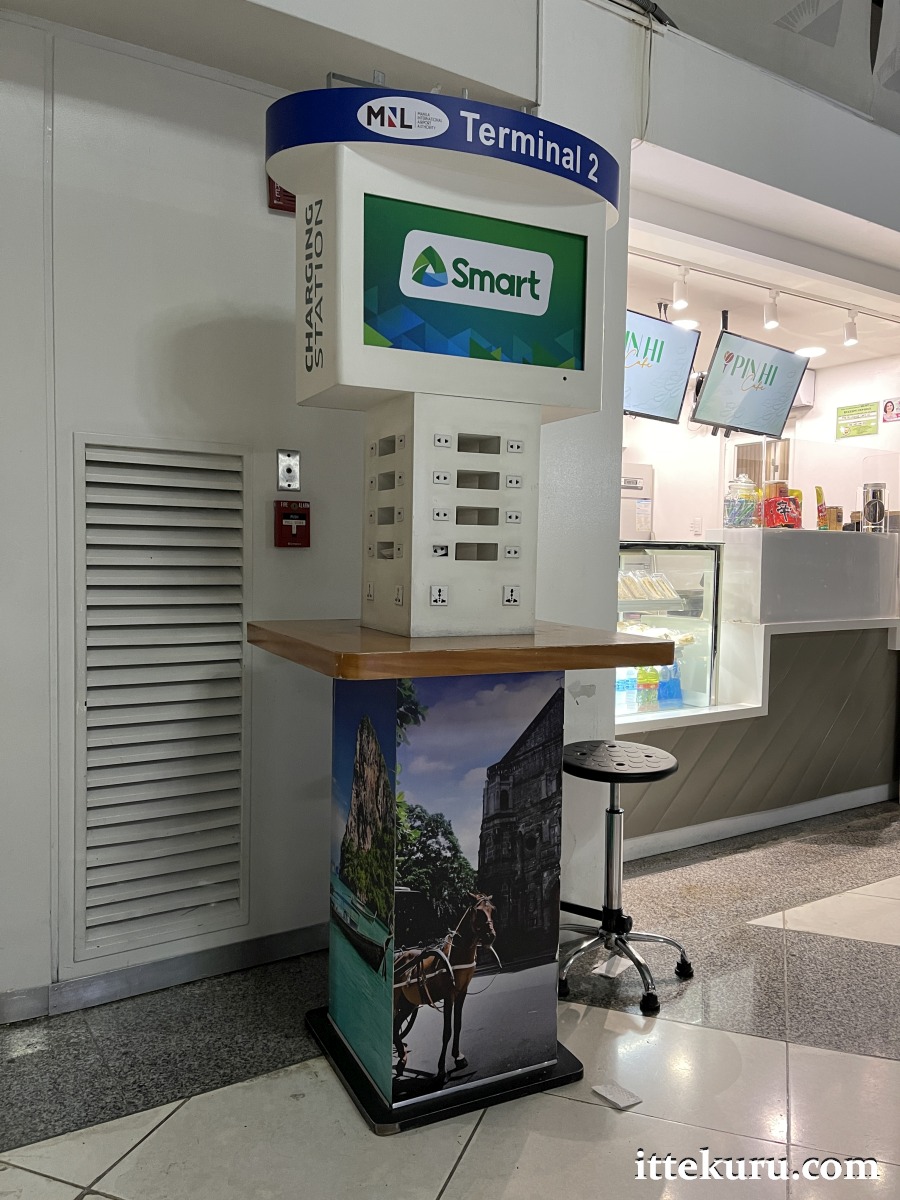
Charging points are available either at standalone stations (such as the one shown below) or fitted into a small number of shared tables. Electricity is supplied at the local standard of 220V, 60Hz.
I am not aware of any dedicated smoking facilities in the airside zone of T2. There is a designated iQOS-branded vaping enclosure near the southern end of the international departures area, but only vapes are permitted inside – conventional smoking is prohibited.

Toilets are available at regular intervals along the length of the terminal.
LOUNGE
The single lounge in T2’s international wing is PR’s own Mabuhay Lounge, access to which is available only for Business Class passengers and high-tier Mabuhay Miles loyalty programme members. There is no third-party or general-access lounge on the premises.

Click here to read a pre-pandemic review I wrote concerning the Mabuhay Lounge. Do note that the lounge interiors, as well as the amenities and services on offer (such as the dining arrangements), have likely changed significantly since that time.
BOARDING GATES
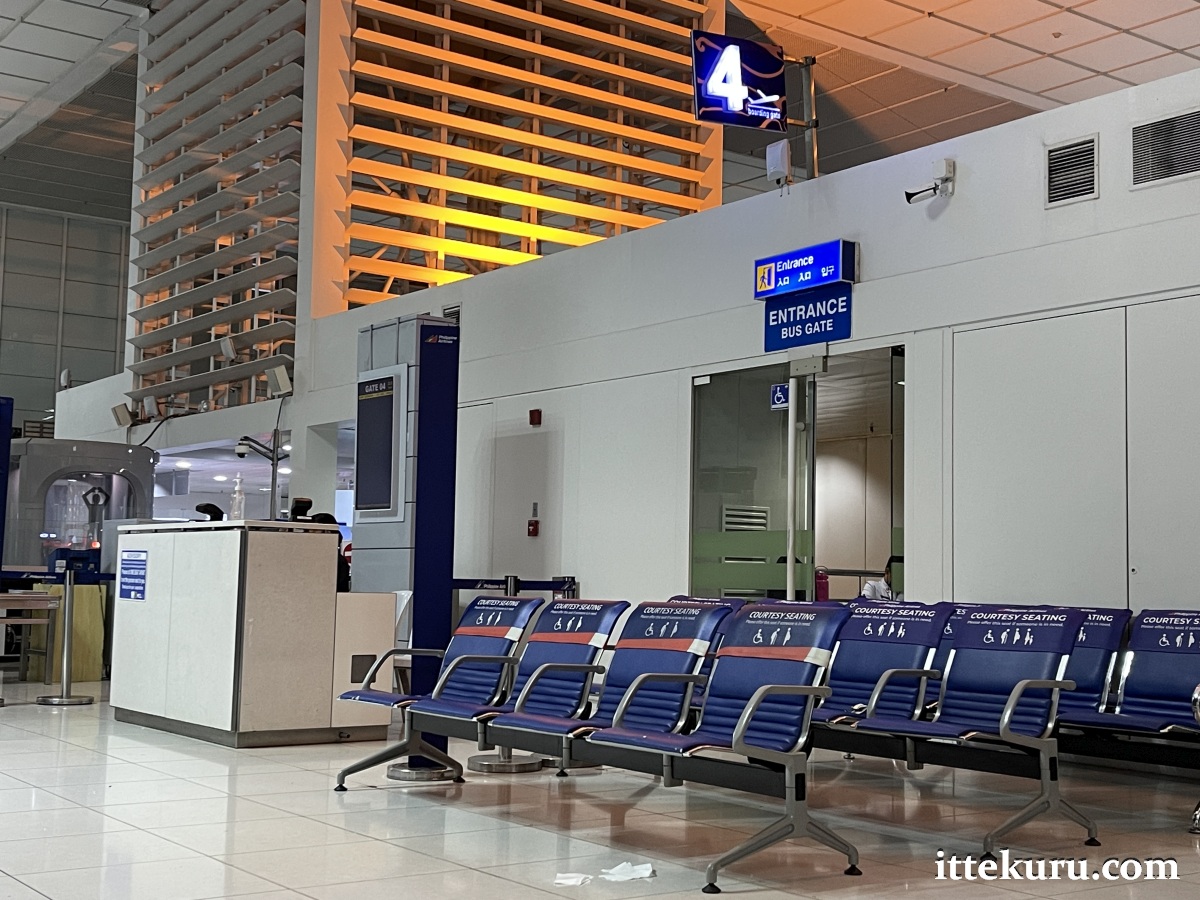
Most of the boarding gates for international flights – specifically Gates 1-7 – are located within the north wing proper. Except for Gate 4, all are linked to conventional elevated piers fitted with one aerobridge each.


Gate 4 is connected to a stairwell that leads down to a bus gate, from which passengers are transported by bus to aircraft parked at the terminal’s remote stands.
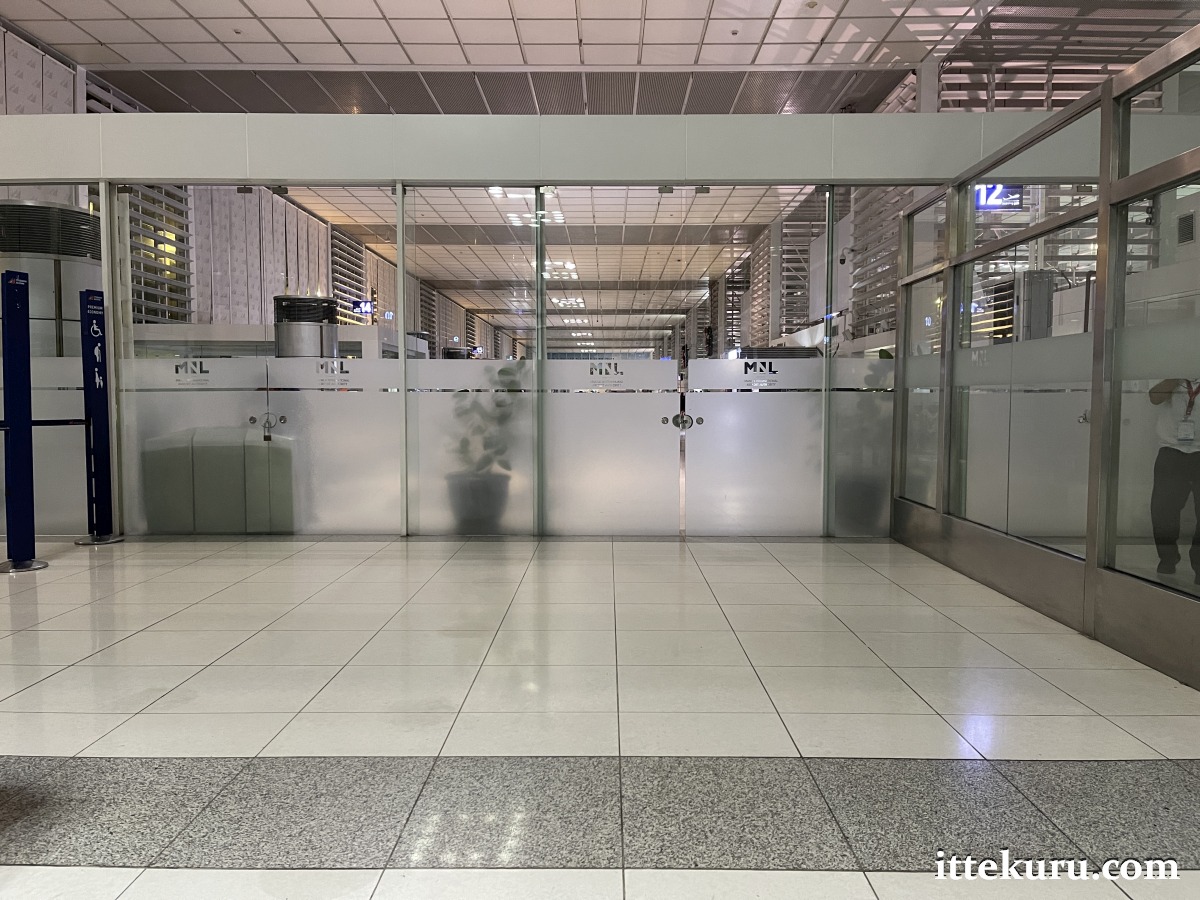
Gates 8-11 – located in a glass-walled enclosure that projects into the south wing – are used for either international flights or domestic flights as the passenger traffic warrants. A set of doors at the far southern end of the north wing (next to the passage leading into the Mabuhay Lounge) is kept open if these boarding gates are assigned for international use, or locked closed if employed for domestic routes. Another set of doors at the edge of the enclosure regulates access depending on which flights Gates 8-11 are serving at the time.
PANDEMIC-RELATED MEASURES
In 2023, the Philippine government scrapped its last remaining pandemic-era emergency directives. Public transport operates at full capacity and disease-control protocols – including mask wearing and social distancing – are no longer enforced.
Be aware that some establishments (such as healthcare facilities) might impose stricter requirements within their own premises and ask visitors to put on a mask before entering.

Not yet ready to pass through immigration and security? CLICK HERE to read my separate Airport Guide documenting MNL T2’s landside zone (i.e., the area before border control).
 Within striking distance
3 thoughts on “Airport Guide: NAIA (MNL) Terminal 2, International Departures – Airside”