This Airport Guide covers the international airside (passengers-only) zone of Ninoy Aquino International Airport’s Terminal 3.
Post last updated from first- or second-hand experience : 06 April 2025 (based on a 24 March 2025 departure)
Post last updated/reviewed using other information : 20 April 2025
NOTE: This article offers general guidance and is not intended to be a definitive resource. The facilities and procedures discussed here are subject to change without prior notice.
In this post, we’ll explore the airside (restricted) area of the international departures wing at Terminal 3 (T3), Ninoy Aquino International Airport (common abbreviation: “NAIA” / IATA code: MNL) – the main airport serving Greater Manila in the Philippines. For our purposes, “airside” includes border control and all passengers-only sections beyond, up to the boarding gates.
For Terminal 3’s domestic wing, click here.
For Terminal 3’s landside area (i.e., the publicly accessible zone before immigration), click here.
For Terminal 3 arrivals (international), click here.
For a broader overview of Terminal 3, click here.
To learn more about the airport as a whole, click here.
CONTENTS
- Immigration and Security
- General Layout
- Shops and Restaurants (Level 3)
- Lounges (Level 4)
- Smoking Areas
- Seats and Boarding Gates
- Pandemic-Related Measures
IMMIGRATION AND SECURITY
MNL T3 was originally designed to serve only international flights. Half of the terminal was split off for domestic routes when it (partially) opened in 2008, but those are now being moved – very gradually – to T2.
Until that process is complete, keep your eyes on the signs and your feet directed towards “International Departures”.

Outbound border control is fairly straightforward, and the process generally runs as follows for ordinary holidaymakers.
Part 1 – 72 hours or less before departure:
Register your information on the Philippine government’s Electronic Travel Declaration System (eTravel). This replaces the old manual departure cards that were phased out in mid-2023.
Part 2 – At the airport on the day of departure:
- Complete check-in formalities and proceed to outbound immigration.
- Join the correct queue. There are separate counters for Philippine and foreign passport holders.
- Present your travel documents to the immigration officer. Most people will only need to submit their passport (with appropriate visas) and boarding pass.
- Have your picture digitally recorded.
- Answer questions if asked, which may or may not happen.
- Receive your duly stamped passport and boarding pass.
- Proceed to the security checkpoint.
If you’re a Filipino citizen travelling overseas for employment, or a first-time traveller with a brand-new passport (which might raise human trafficking concerns), or if other special circumstances exist, more documents may need to be furnished and the interview could take longer. A summary of additional requirements listed by travel purpose – which, I must emphasise, most leisure travellers will NOT be asked to present – can be found here.
After immigration comes security screening. The official website of the Office for Transportation Security sets out detailed guidance on what’s permitted in baggage (checked or carry-on).
One VERY IMPORTANT thing to bear in mind whilst undergoing security inspection: DON’T CRACK ANY JOKES ABOUT CARRYING A BOMB. Even a plainly humorous jest about having explosives on your person or in your luggage might land you in very, VERY deep trouble. The jocular nature of such a remark is no defence, and neither is the absence of an actual bomb upon subsequent inspection. At worst, you’ll face five years in prison and a fine to boot. DON’T DO IT.
GENERAL LAYOUT
Here’s a floor plan of the international departures area as shown on one of T3’s information displays.

Use this with caution as the shops, restaurants, corridors and boarding gates are not drawn to accurate scale.
SHOPS AND RESTAURANTS (Level 3)
The airside zone of MNL T3 is similar to the departures areas you’ll see in other large airport terminals. To speak plainly, it’s just a shopping centre with aerobridges bolted to the walls.
Even though more than a decade has passed since it opened, the terminal remains partially unfinished. This explains the lack of fit-and-polish in its overall appearance, as well as the walled-up sections and blocked corridors you might encounter.
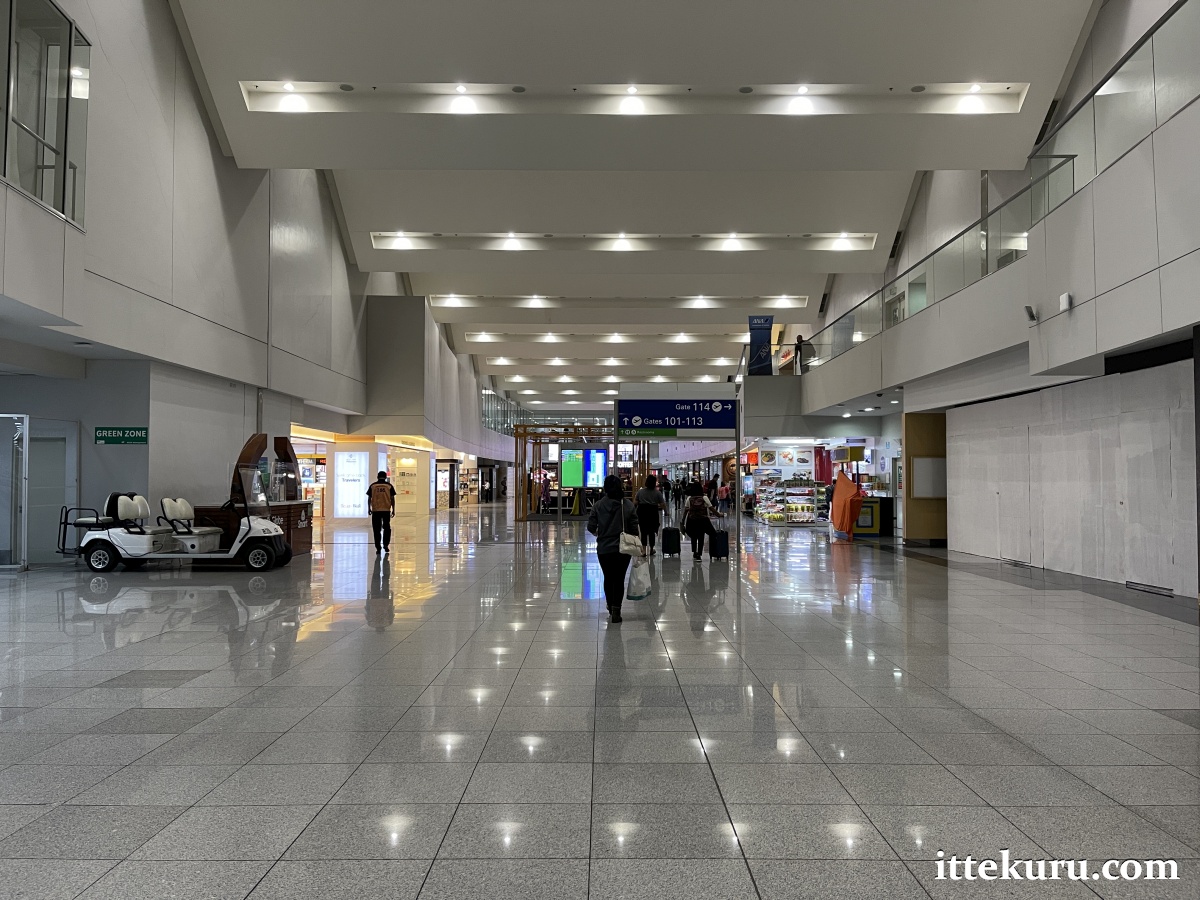
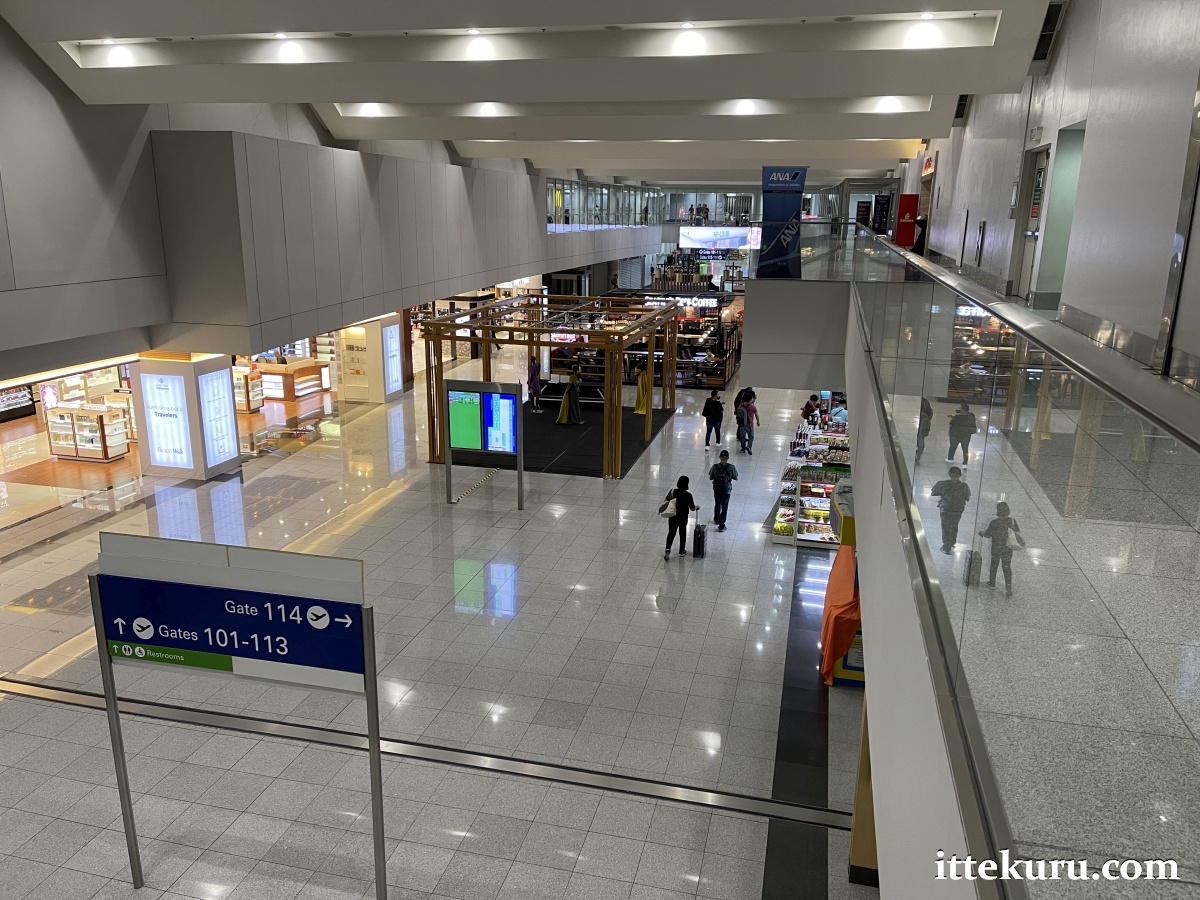
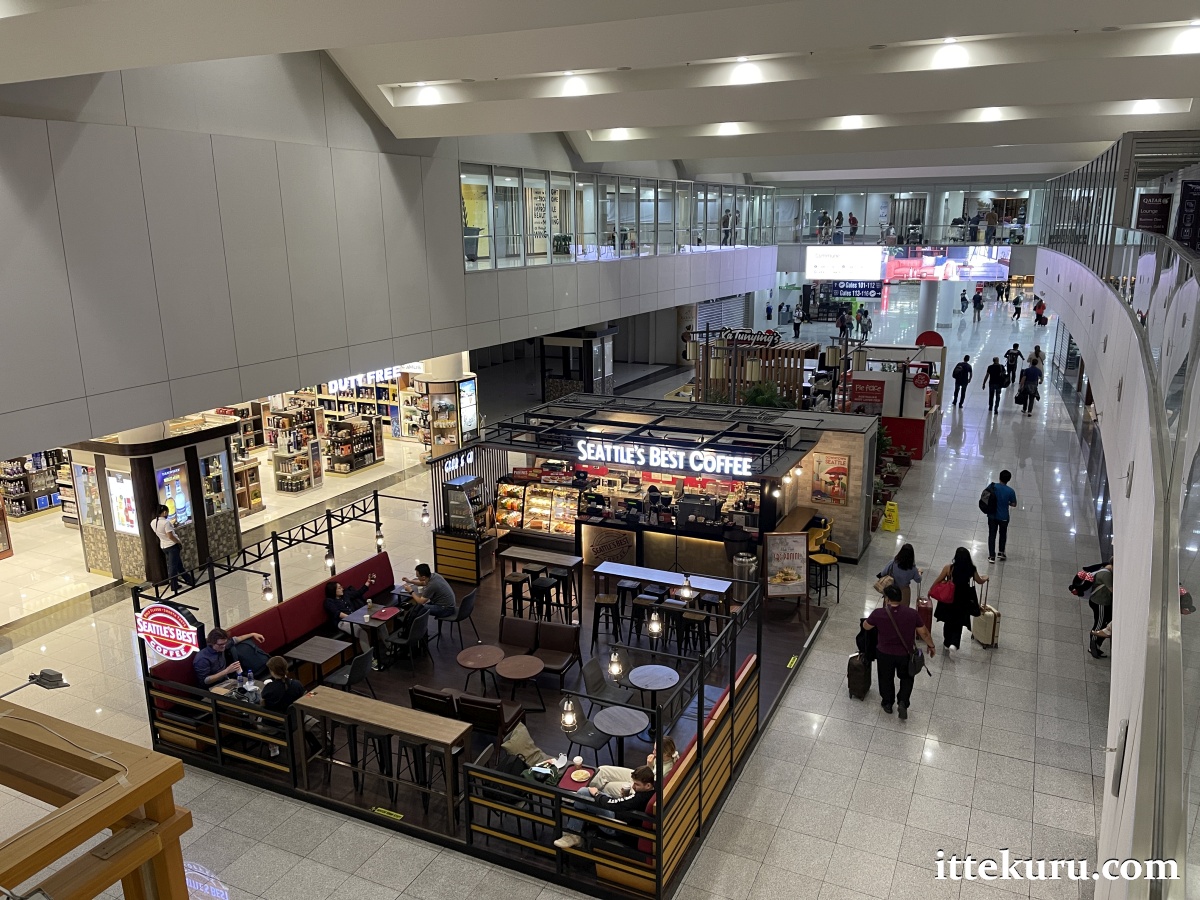
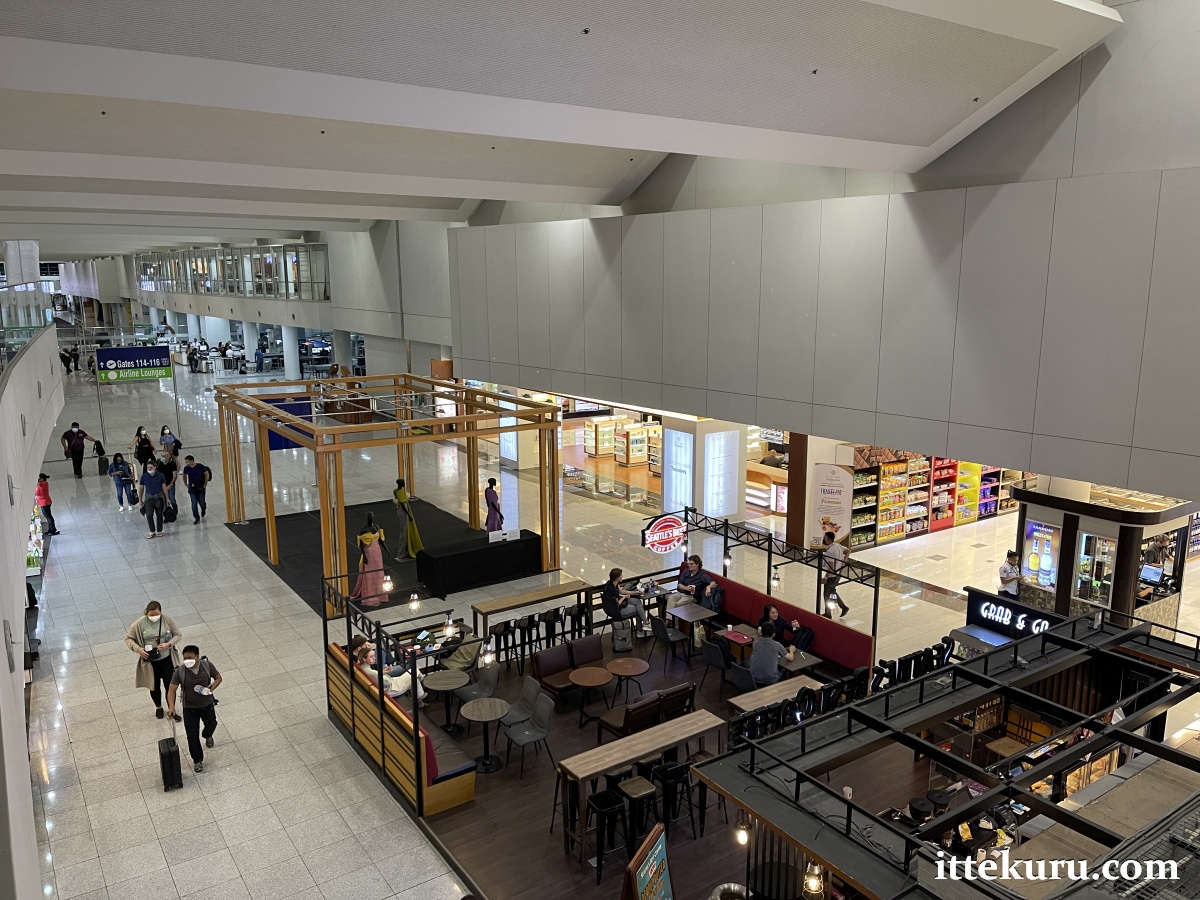
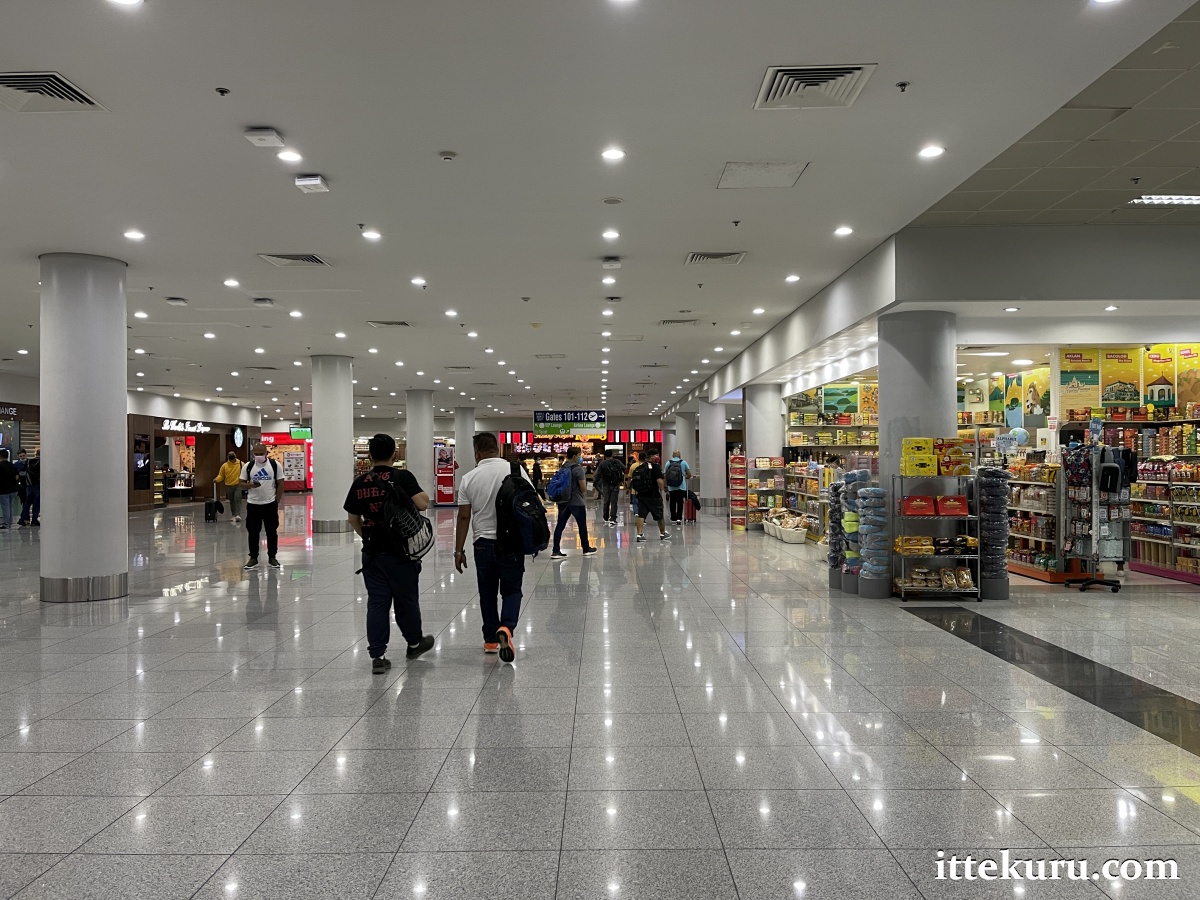
Most of T3’s food service establishments are concentrated in the central hall next to the duty free shops. Options are fewer and more basic – e.g., snack stalls and convenience stores – the further south you go.

Note that if you’re coming from security, south is the only direction you can head towards. Anyone turning north will soon run into this.
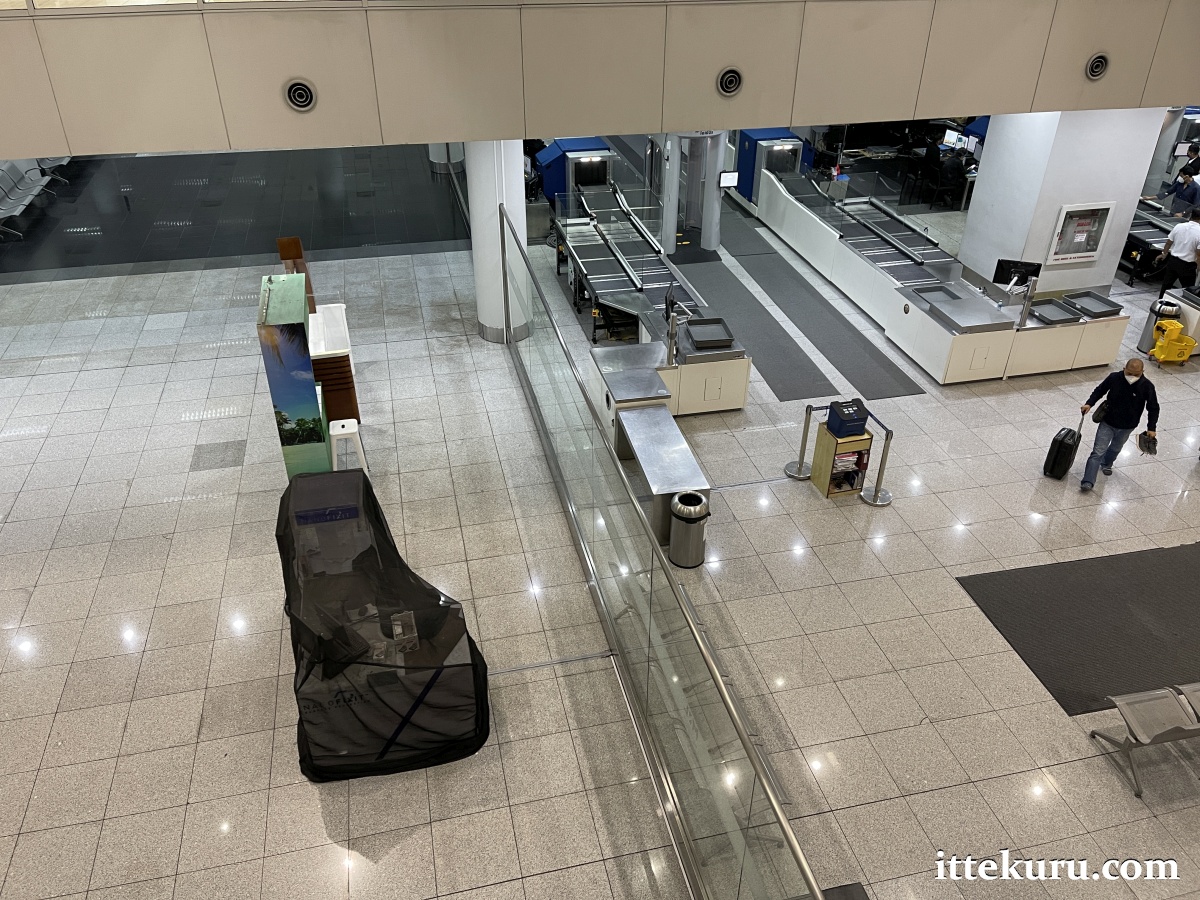
That glass-and-steel partition runs down the centre of the building, from the immigration zone through to the boarding area. The purpose of this barrier is to separate T3’s international and domestic halves, and it’s expected to remain until domestic flights have been fully transferred out.
Toilets can be found at regular intervals across the length of the terminal building.
LOUNGES (Level 4)
T3’s lounges are located one level above the boarding area. Follow the signs labelled “Airline Lounges” until you reach a set of lifts and stairs leading up to the next floor.
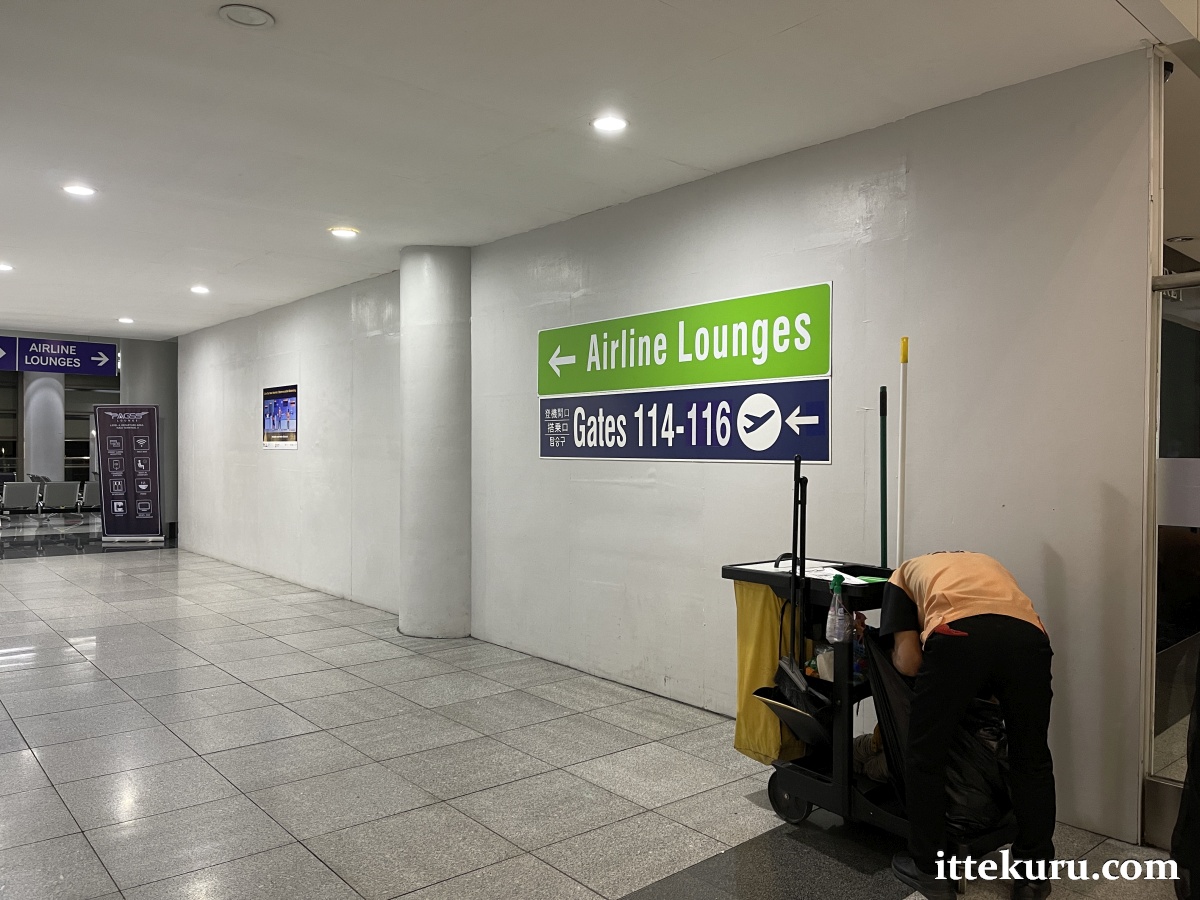
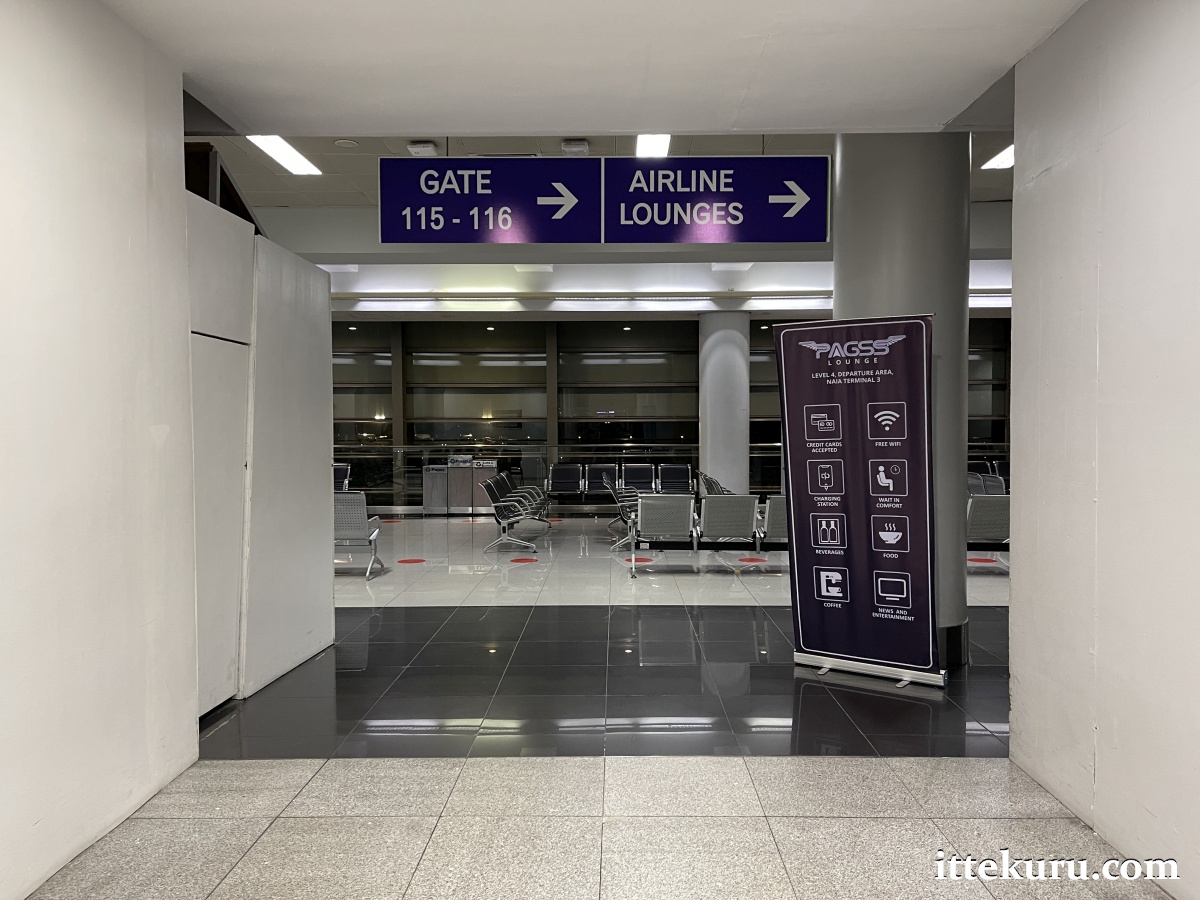
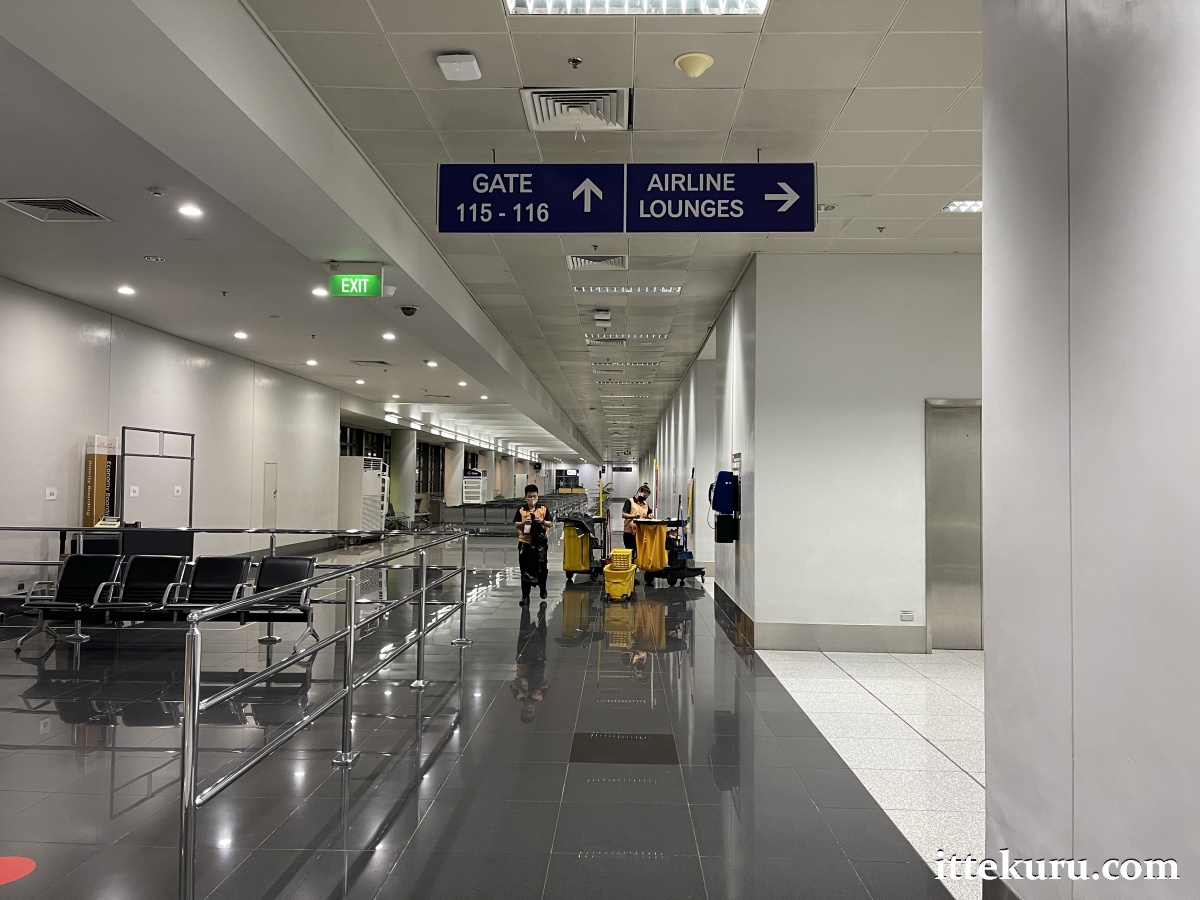
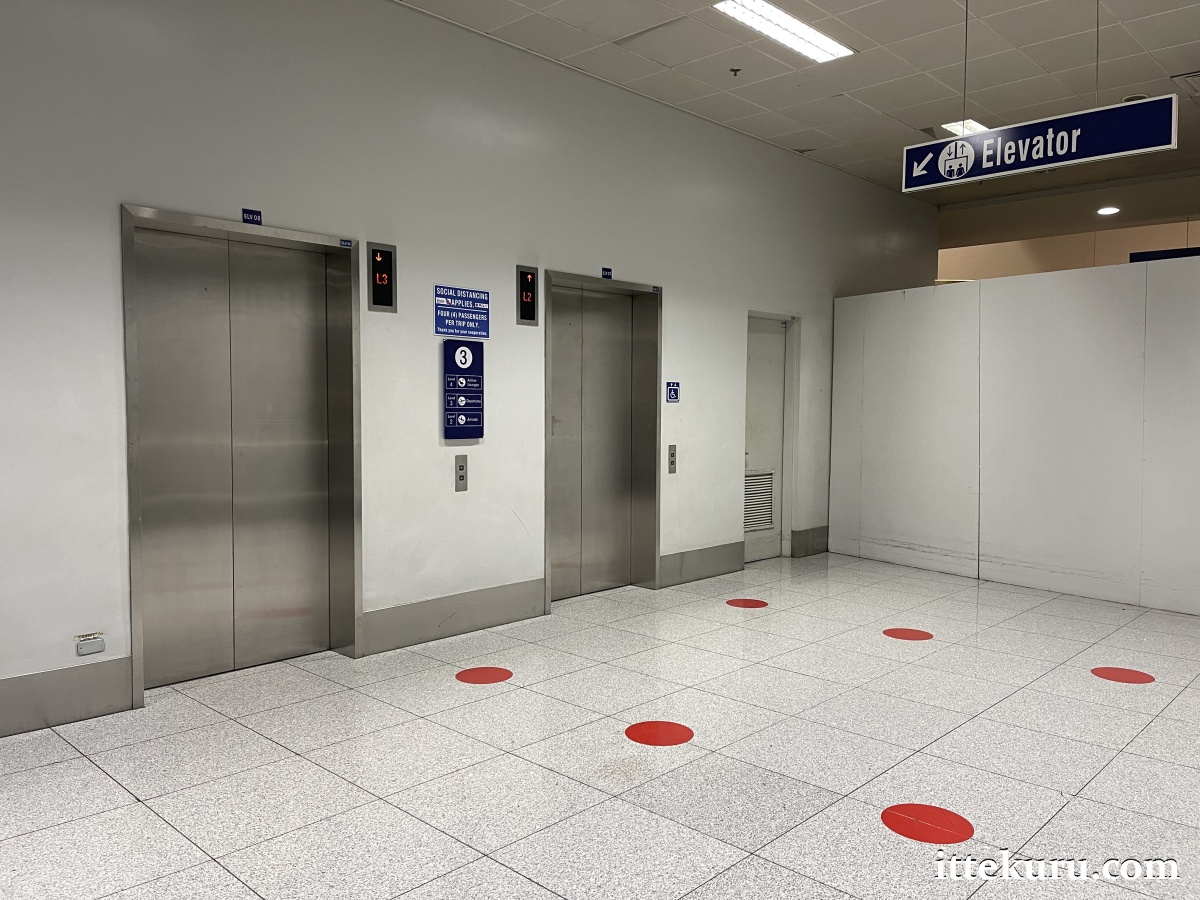
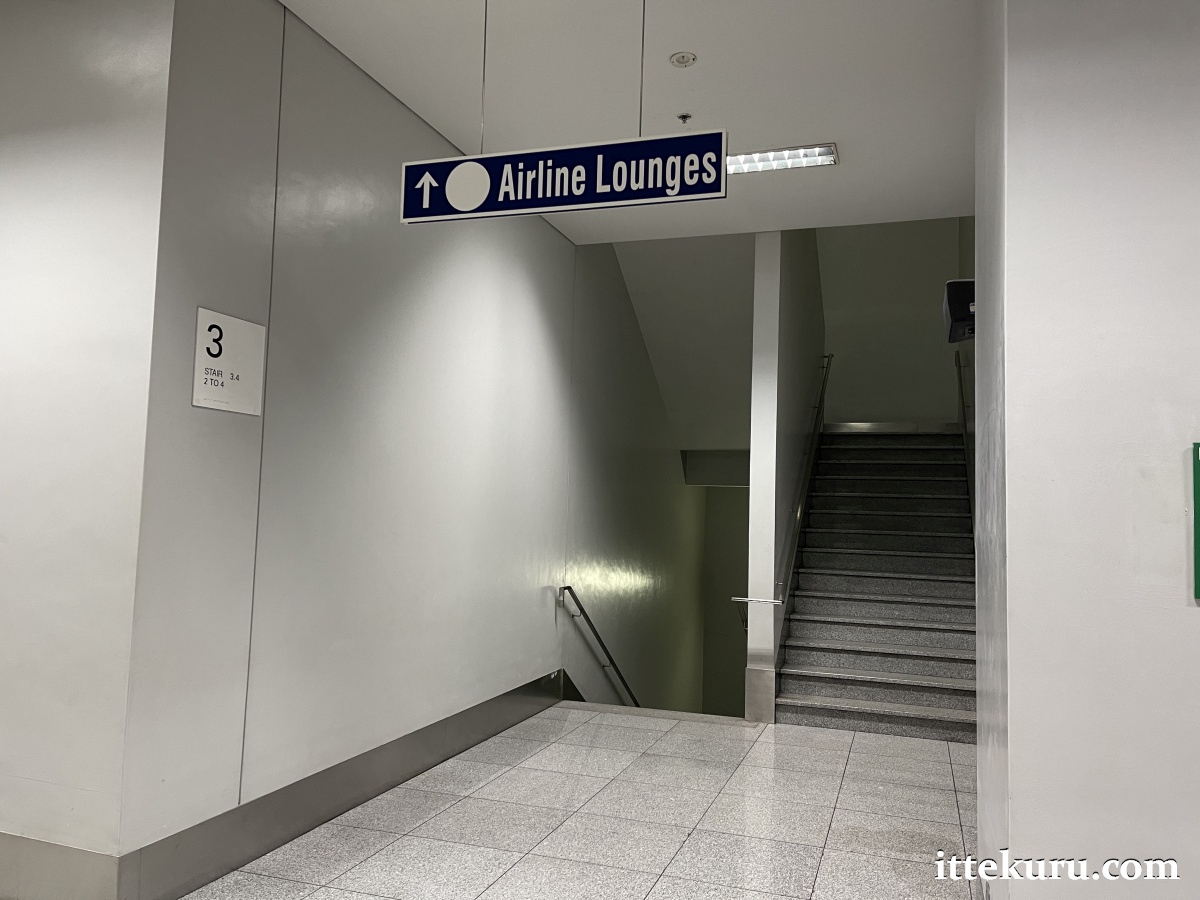
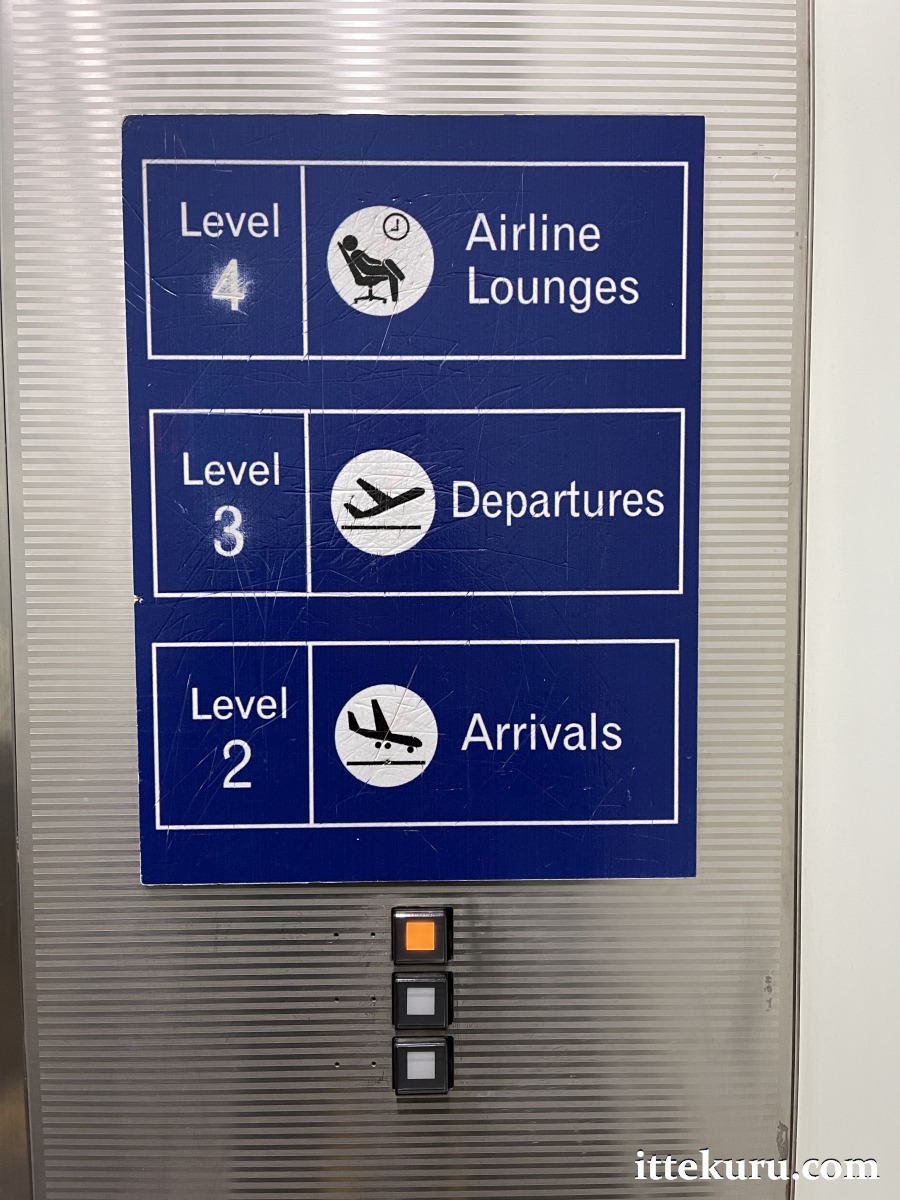
There are three third-party/commercial lounges and two airline-operated lounges up here on Level 4.
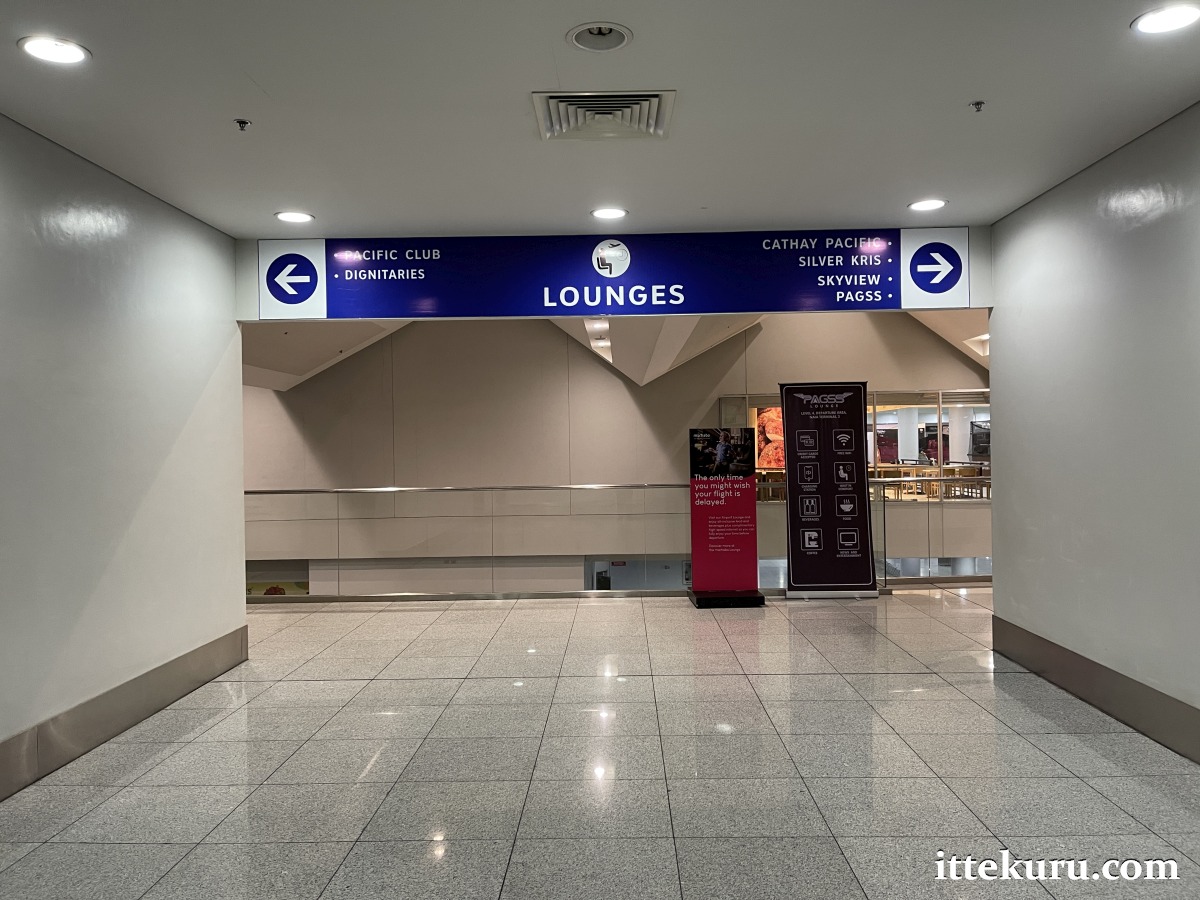
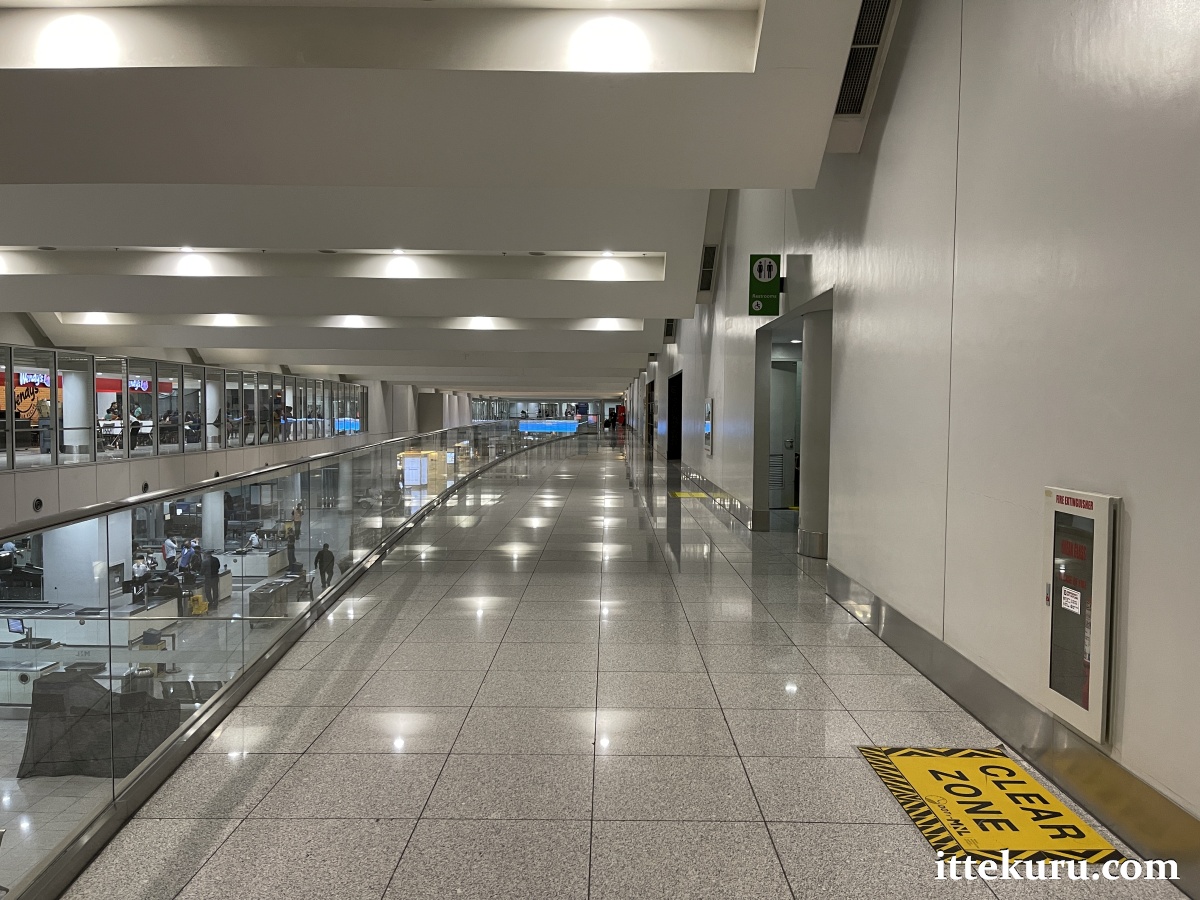
Turn left from the lifts and you’ll find the “A” Lounge overlooking the domestic half of the terminal. (The entire lounge floor – including the area directly above domestic departures – is part of the international zone and only accessible to passengers flying overseas.)
Turn right and you’ll first pass two airline-operated facilities: the Cathay Pacific lounge and Singapore Airlines’ Silver Kris lounge.
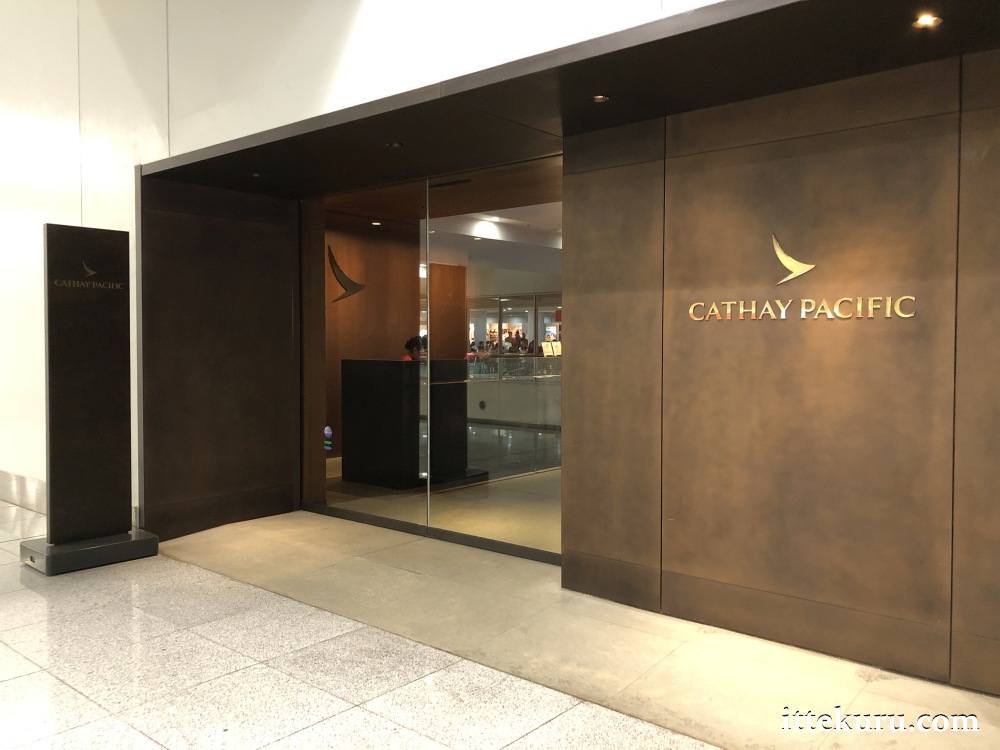
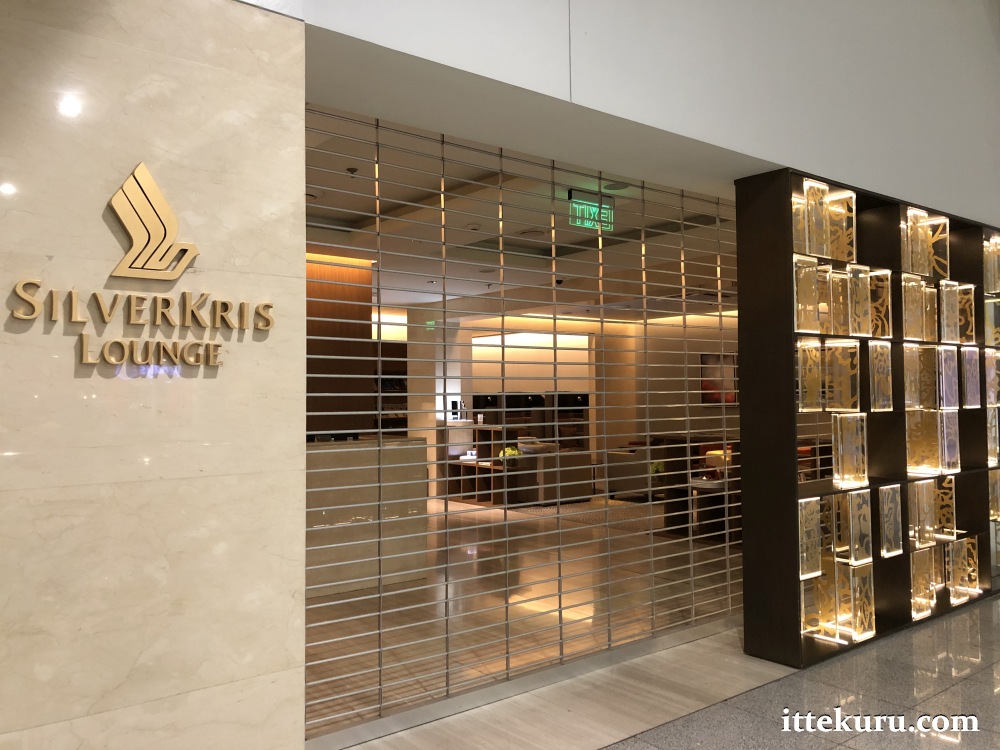
The remaining lounges are commercially run establishments. There’s the Marhaba Lounge – formerly known as the “Skyview Lounge” – and further down the hall is the PAGSS Lounge. Both are contracted to serve premium/tiered passengers of certain airlines, but also accept walk-in guests for a fee.
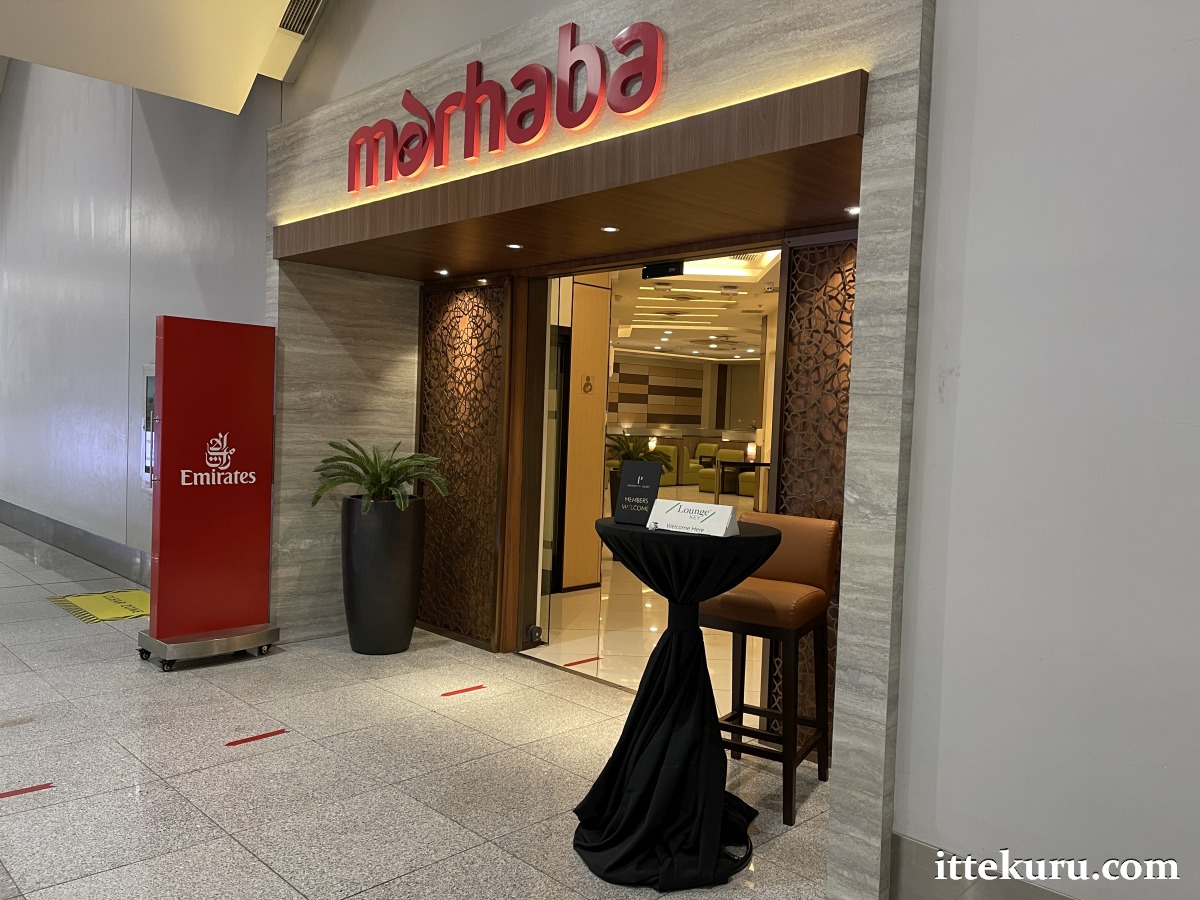
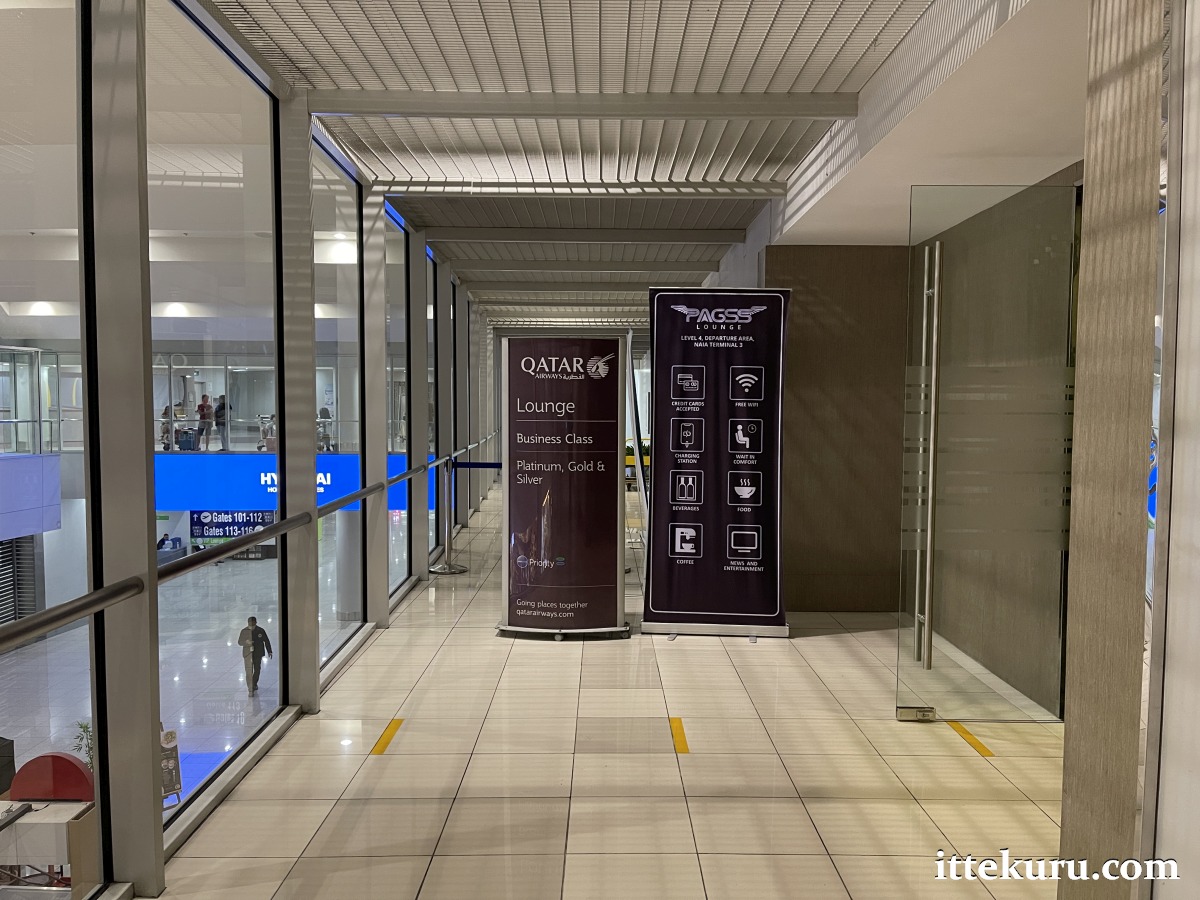
Detailed reports/reviews are available for the following T3 lounges that I’ve personally used (click on each lounge name to learn more):
- Cathay Pacific Lounge
- Marhaba Lounge (the former “Skyview Lounge”)
- PAGSS Lounge
SMOKING AREAS
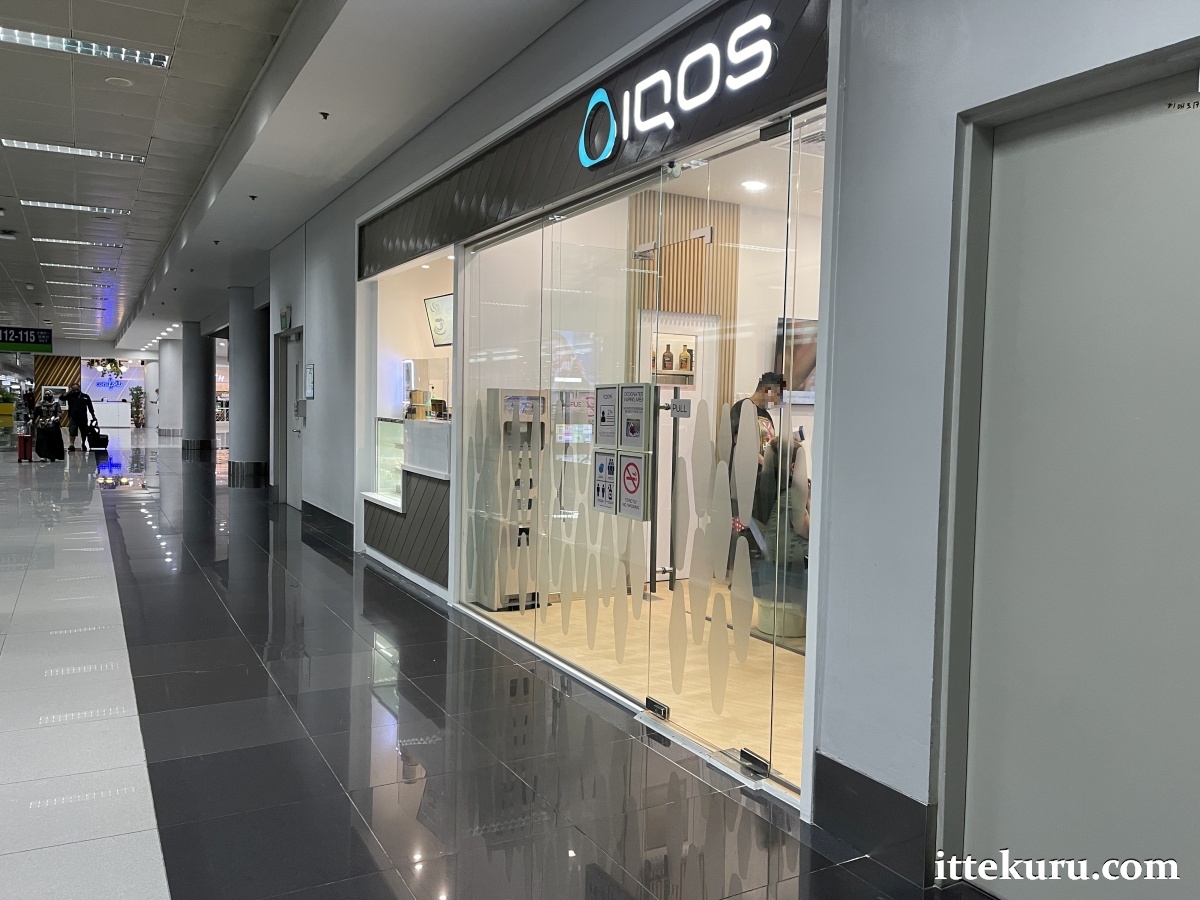
In the general departures area on Level 3, there’s an IQOS-branded vaping room near the start of the long corridor leading towards the southern gates. Caveat: (1) Guests must be 21 or older to enter. (2) Conventional smoking is prohibited (only vapes are allowed).
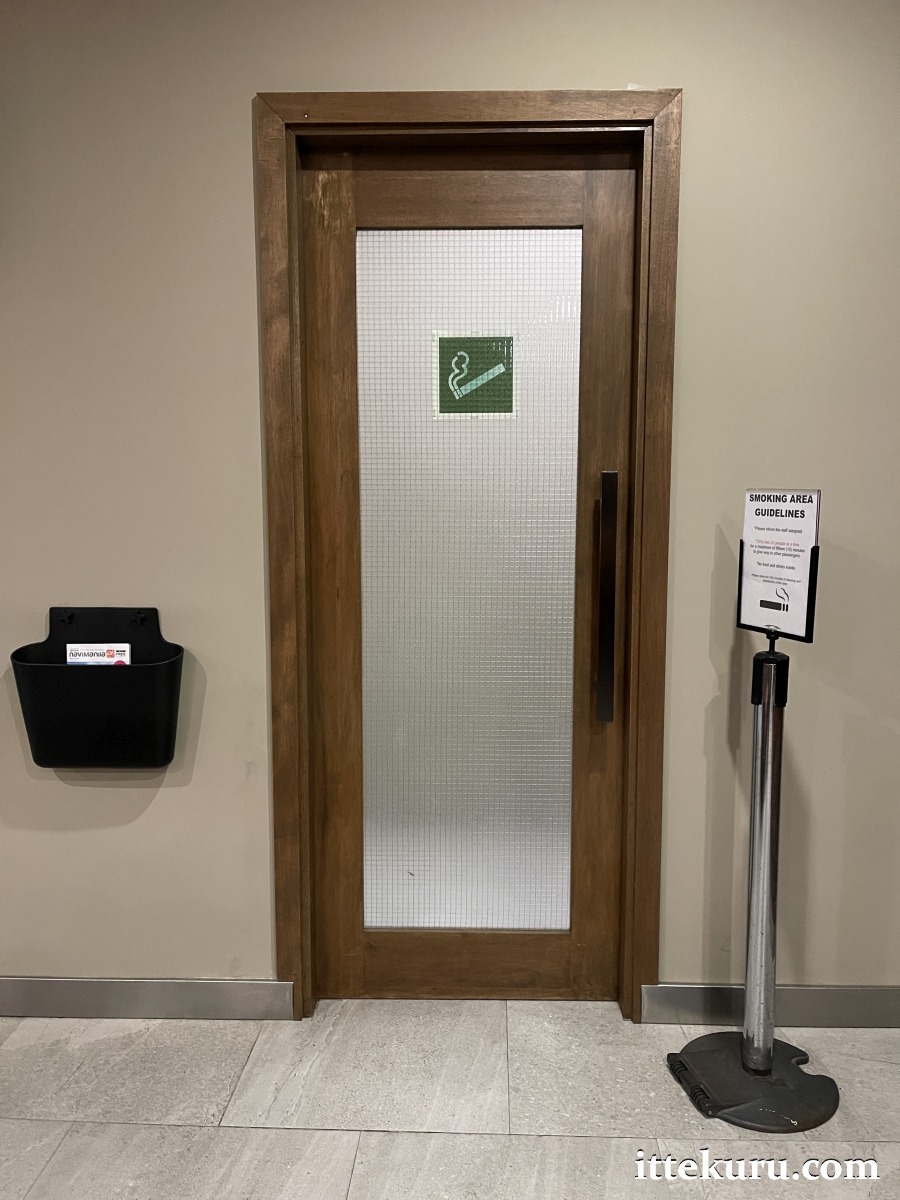
Up on Level 4, there’s a small smoking room nestled deep within the PAGSS Lounge. Caveat: (1) You’ll need to have access entitlement for this particular lounge, either from your airline (Business Class etc.) or as a paying guest. (2) Inform lounge staff before using the room as it must be sanitised between uses. (3) The room can only be used by 2 people at a time. (4) There’s a 15-minute limit per use. (5) Food and beverages are not permitted in the smoking room.
SEATS AND BOARDING GATES
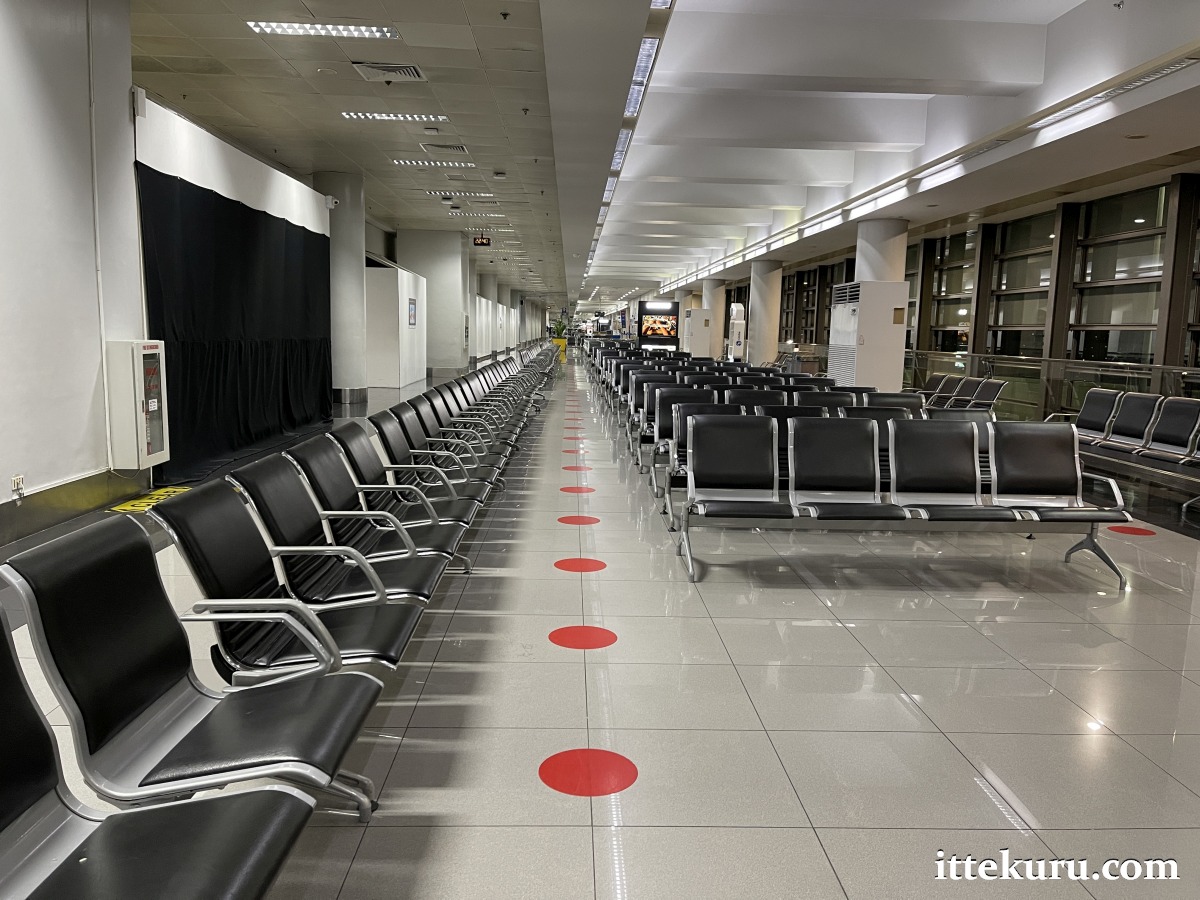
The passenger waiting areas and boarding gates are all on Level 3, alongside retail and dining.
Charging points are few and far between. Those that do exist are inconveniently set up as standalone stations (like the one shown below) rather than being fitted into or next to the seats.

Tables are nowhere to be found – other than in dining establishments and lounges – so using a portable computer or consuming a meal might pose a challenge.
T3 also has a number of restricted holding areas, utilised mainly for US-bound flights that require more stringent security. These sections are screened off from the rest of the terminal by glass-and-steel walls (like the one on the right side of the following picture). Access is regulated by an extra checkpoint equipped with metal detectors and baggage scanners.
Full-service airlines – as well as large aircraft employed by any airline, LCCs included – normally dock at gates close to the middle of the terminal. The boarding piers are fitted with double aerobridges, but they’re not always deployed together (typically only one will be in service regardless of aircraft size).
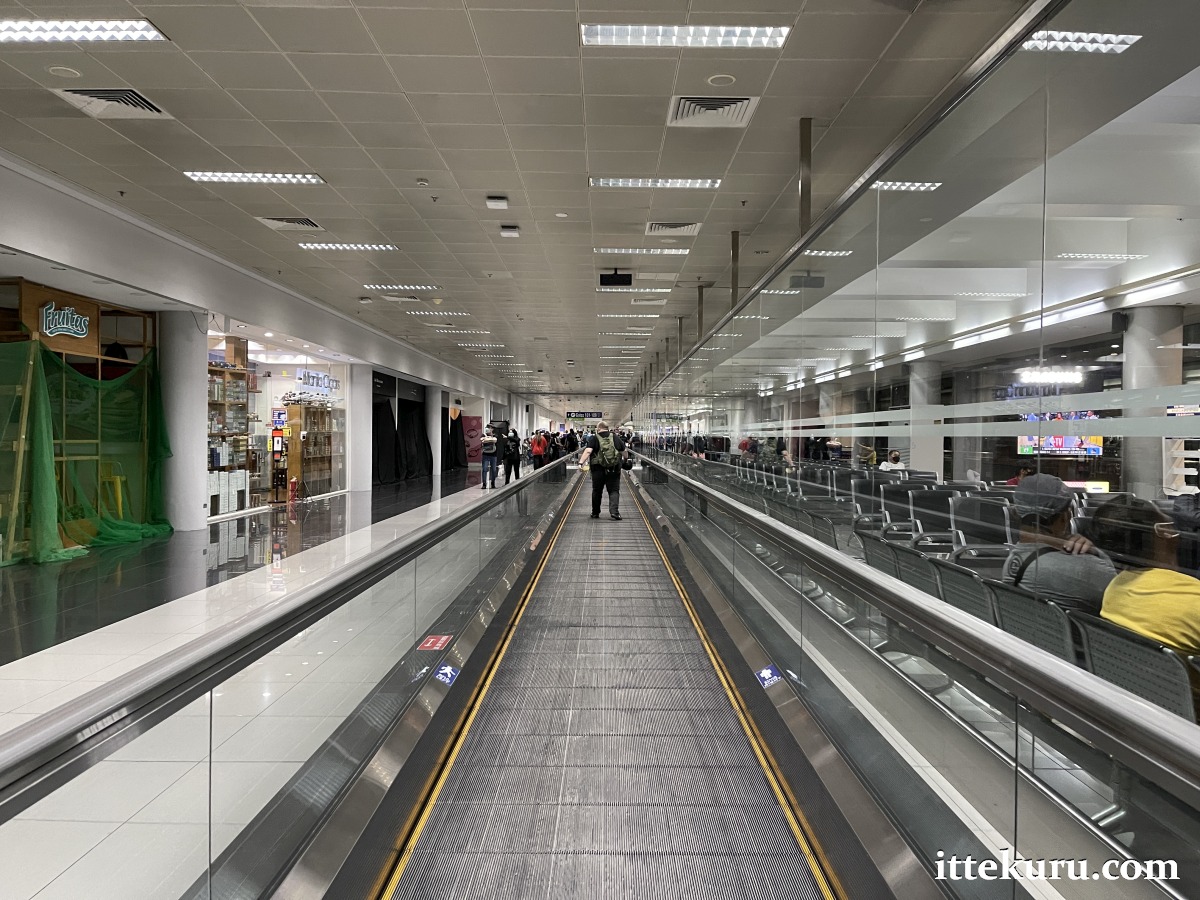
LCC flights operated with smaller aircraft are usually assigned to the distant gates along the south-eastern finger of T3, a long walk from immigration and security.


The moving walkways only run in a single direction, towards the furthest end of the terminal. Passengers going the other way must do so entirely on foot.
The gates at the far end are designed for narrow-body planes and are equipped either with a single aerobridge or – as in the case of Gate 105/106 – twin aerobridges that can each be connected to a different aircraft.
At T3’s larger gates, passengers use a long ramp to descend from the departures floor to the boarding pier. From there, an aerobridge leads them straight to their waiting aircraft.

T3’s domestic wing (covered in a separate guide) also has a number of bus gates at tarmac level, from which passengers are transported to aircraft waiting at remote parking stands.
PANDEMIC-RELATED MEASURES
In 2023, the Philippine government scrapped its last remaining pandemic-era emergency directives. Public transport operates at full capacity and disease-control protocols – including mask wearing and social distancing – are no longer enforced.
Be aware that some establishments (such as healthcare facilities) might impose stricter requirements within their own premises and ask visitors to put on a mask before entering.
Not yet ready to pass through immigration and security? CLICK HERE to read my separate Airport Guide documenting MNL T3’s landside zone (i.e., the public area before border control).
Like what you’re reading? Buy me a coffee!

 Within striking distance
No mention of the One Stop Immigration in level 3 ??