

Terminal 3 (T3) is the newest and largest of the four terminals at Greater Manila’s Ninoy Aquino International Airport (IATA: MNL / ICAO: RPLL / Abbrev.: NAIA). This Airport Guide outlines what passengers can expect when they pass through this facility.
NOTE: This Airport Guide and the separate posts linked to it should only be used for general guidance. Details may change at any moment and without prior notice.
For the sake of brevity, abbreviations and IATA codes will be used throughout this post in place of full airline or airport names – e.g.; “T3” instead of “Terminal 3”, “MNL” instead of “Ninoy Aquino International Airport”.
To learn more about Ninoy Aquino International Airport (“NAIA”/MNL) as a whole, please click here to view my comprehensive guide covering the Philippines’ busiest aviation hub.
CONTENTS
- Location
- Access and Transportation
- Departures
- Landside (accessible to both passengers and the general public)
- Airside – International (accessible only to passengers travelling overseas)
- Airside – Domestic (accessible only to passengers travelling domestically)
- Arrivals
LOCATION
ACCESS AND TRANSPORTATION
To learn more about your options for travelling to or from MNL’s terminals (including T3), please refer to the Access / Transportation section of my MNL Airport Guide.
DEPARTURES
Like most airport terminals, MNL T3 has separate landside and airside zones. The landside zone can be visited by non-passengers and offers a wider variety of shops and restaurants than the restricted, passengers-only airside zone. However, the latter does have unique features such as duty free outlets and airline lounges.
Landside
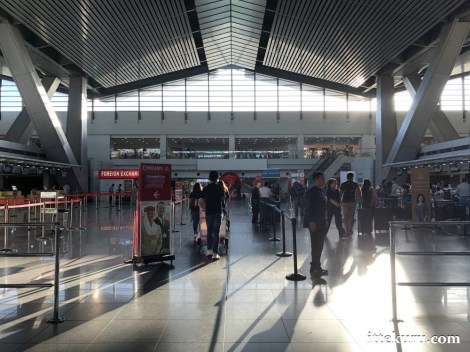
The landside zone of T3 includes the publicly accessible area before immigration and final security. As used within this guide (and the sub-guides linked to it), the term “landside” also encompasses certain parts of the terminal that can be entered only by passengers – such as the area around the check-in counters – so long as these are located before the main pre-departure security checkpoint.
Click here or on the image below to read my separate Airport Guide covering T3’s landside zone.
Airside – International
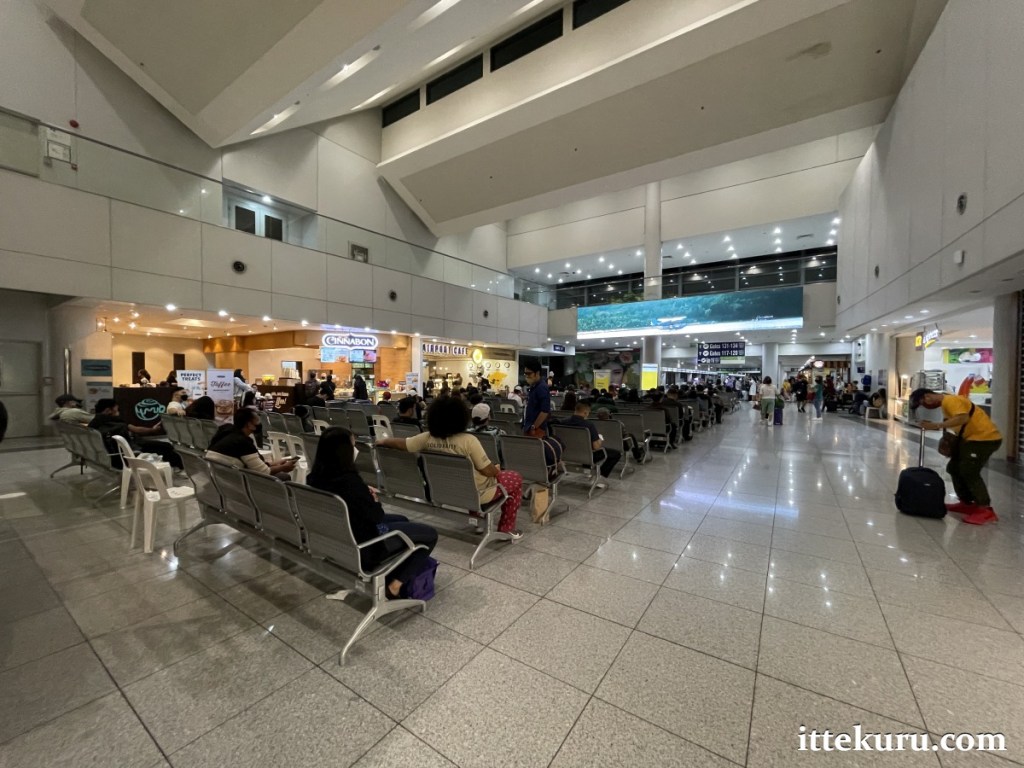
The international airside zone of T3 covers the restricted, passengers-only area after immigration and final security. This includes the boarding gates, the nearby holding areas, and all lounges and retail/dining facilities accessible only to travellers flying out of the Philippines who have completed pre-departure formalities and passed through border control.
Click here or on the image below to read my separate Airport Guide covering T3’s international airside zone.

Airside – Domestic
The domestic airside zone of T3 is broadly similar to its international counterpart, but features a different set of dining and retail facilities. This part of the terminal can only be accessed by passengers travelling within the Philippines.
Click here or on the image below to read my separate Airport Guide covering T3’s domestic airside zone.
ARRIVALS
International Arrivals
This section includes inbound quarantine and immigration, as well as baggage reclaim and customs control.
Click here or on the image below to read my separate Airport Guide covering T3’s international arrivals facilities.

Domestic Arrivals
This area of T3 is used by passengers arriving on flights from other parts of the Philippines. Unlike the international arrivals zone, there are no quarantine, immigration, or customs controls.
Click here or on the image below to read my separate Airport Guide covering T3’s domestic arrivals facilities.

Like what you’re reading? Buy me a coffee!

 Within striking distance
20 thoughts on “Airport Guide: Ninoy Aquino International Airport Terminal 3 (MNL T3)”